Disclaimer: some of the links in this article are affiliate links, which means I may earn a small commission if you buy through them, at no extra cost to you. As an Amazon Associate I earn from qualifying purchases.
If you’re flying in Iceland, bring the biggest drone you’re happy to carry and get licensed for. For serious photography that’s the DJI Mavic 4 Pro, the drone I use for my paid work here. If you want something lighter, the DJI Air 3S is the one I’d point you to. Both cope well with wind, and in Iceland that matters more than any other spec on the box.
This is my honest answer, from close to 40000 images and well over 10000 kilometres of flying the Mavic 4 Pro across Iceland and Greenland. Let’s dive in!

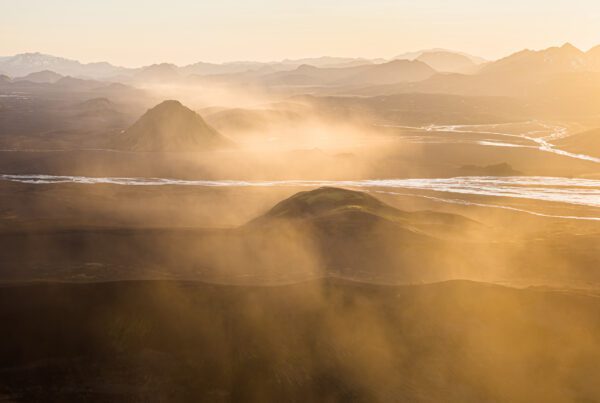
Cloud spilling over a mountain in the Icelandic Highlands, in low golden light.
My Quick Answer
- Best for serious photography: DJI Mavic 4 Pro. 25 megapixel 4/3 Hasselblad main camera, two telephotos, 12 m/s wind rating. A C2 drone at 1063 grams.
- Best lighter all-rounder: DJI Air 3S. 12 megapixel 1-inch main camera plus a 70mm telephoto, 12 m/s wind rating. A C1 drone at 724 grams.
- Why not a Mini: the Mini 5 Pro has the same 12 m/s rating on paper, but at 249.9 grams it’s a lot harder to keep steady in Icelandic gusts. If you do want one, buy the new European Fly More Combo Plus, which DJI certifies as C1.
- Real flight time: DJI quotes 51 minutes for the Mavic 4 Pro. In Icelandic wind and cold I get 35 to 42 minutes. For the Air 3S, plan on roughly 30 to 35 minutes instead of the quoted 45. Plan around the lower number.
- Rules: any drone with a camera means you register as an operator, and over 250 grams you also need the free A1/A3 licence. The full rules are in my Iceland drone laws guide.
My Pick For Serious Photography: DJI Mavic 4 Pro
It has replaced my Mavic 3 Pro for paid work, and it’s the drone I reach for on every Iceland and Greenland trip. Three things make it the right drone for Iceland, to me:
- Stability in wind. More on that below.
- Range of focal lengths. I still shoot most with the 1x main camera, but I reach for the 70mm and 168mm telephotos a lot more than I did on the Mavic 3 Pro. In Iceland that means you can pick out river braids or a single farmhouse in a huge landscape without flying closer.
- Image quality for big prints. The 4/3 Hasselblad sensor gives me dynamic range and colour the Mavic 3 Pro simply can’t reach, and a lot more room in the edit.

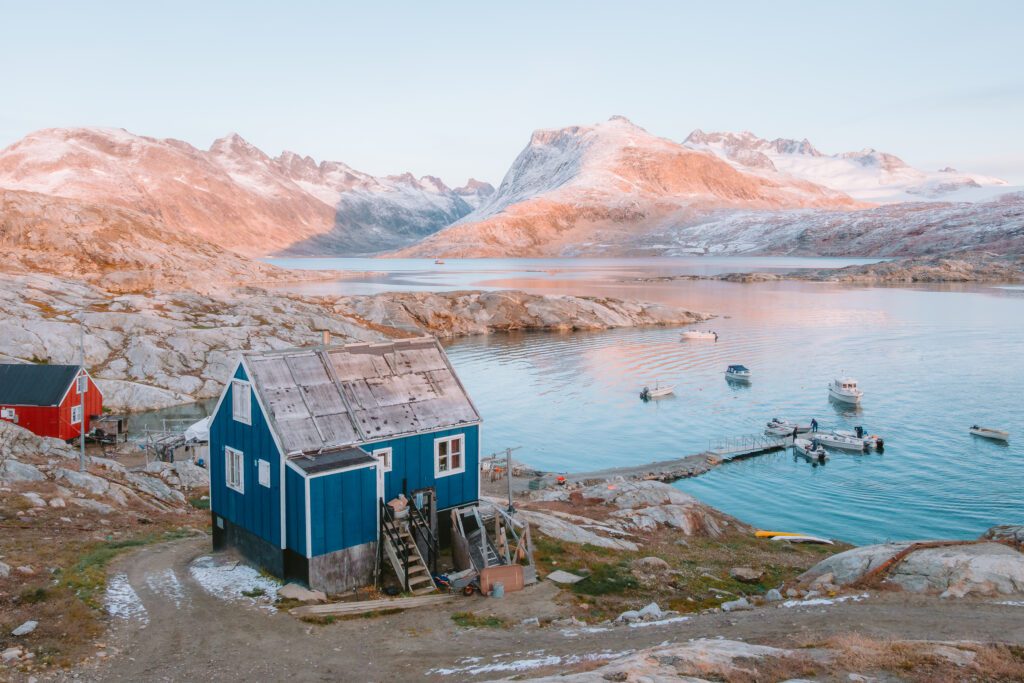
A Greenland fjord under a pink lenticular cloud.
Is it perfect? No, it is not. At 1063 grams it’s not a drone you throw in a daypack, and it’s a C2 drone, which affects where you can fly it (more on that below). In wind I’ve also run into a few quirks:
- The gimbal sometimes gets knocked upwards in strong wind, but only when looking straight down and moving forward or backward.
- Taking off in wind, the gimbal doesn’t always keep the horizon straight. Rotating the gimbal with the 360° slider and resetting it fixes it.
- On one occasion a sudden gust almost tipped it forward during take-off.
None of that has stopped me, but it’s worth knowing before your first windy launch. I go into all of it in my full Mavic 4 Pro review.
My Mavic 4 Pro on the car bonnet before a flight in Iceland.
Buy it if you shoot for print or paid work, or you want the best image quality you can get from a folding drone. Skip it if you want something light for hiking, or you don’t want the extra rules that come with a C2 drone. Check the current price of the Mavic 4 Pro.
The Lighter All-Rounder: DJI Air 3S
If the Mavic 4 Pro is more drone than you want to carry, the DJI Air 3S is the one I’d recommend for Iceland.
To be clear: most of my time with the Air 3S has been on my workshops, in the hands of participants, and that’s what this recommendation is based on. It works really well, and it’s very good in wind. What holds it back is resolution: the standard files are only 12 megapixels. More on that in my DJI Air 3S review.

A panorama I shot with the DJI Air 3.
On paper, it has what matters here:
- The same 12 m/s wind rating as the Mavic 4 Pro, at 724 grams.
- A 1-inch main camera (24mm equivalent, f/1.8) and a 70mm telephoto. The 70mm is really useful for picking out details in a big landscape.
- It’s a C1 drone, so the free A1/A3 licence is all you need.
The catch is the fixed aperture. There’s nothing to stop down to, so in bright conditions you control exposure with shutter speed and ND filters only.
Buy it if you want a drone that copes with wind but is easier to carry and license. Skip it if you sell large prints and want the extra resolution and reach of the Mavic 4 Pro. Check the current price of the Air 3S.

Taken with the 3x telephoto on the DJI Air 3, the Air 3S’s predecessor.
What About The DJI Mini 5 Pro?
I like the Mini 5 Pro a lot, and I reviewed it here. It has a 1-inch sensor and it’s small enough to take anywhere. For Iceland, it’s still not one of my two picks, because it really struggles on windy days (more on that below).
One thing has changed for European buyers: DJI now sells a Fly More Combo Plus in Europe, and the drone in that combo is certified C1. The standard Fly More Combo stays C0. Until now, European buyers couldn’t get the Plus batteries at all.

The Mini 5 Pro leaning hard into the wind in the Icelandic Highlands.
What that means for flying in Iceland:
- Longer flights. On the Plus battery I get roughly 38 to 45 minutes in real conditions, against roughly 25 to 30 on the standard one.
- No 120 metre take-off cap, because it’s a C1 drone, not a C0.
- You need the free A1/A3 licence, like any drone over 250 grams.
- Buy the Plus combo, don’t just add Plus batteries later. DJI says a C0 drone fitted with a Plus battery goes over the C0 weight limit and can no longer be flown as a C0 drone.
If you’re mostly flying on calm days and weight is everything, the C1 Combo Plus is the version I’d buy. Check the current price of the Mini 5 Pro Fly More Combo Plus. The same split exists for the Lito X1, which also comes in a C1 Fly More Combo Plus in Europe; more on that in my Lito X1 review.

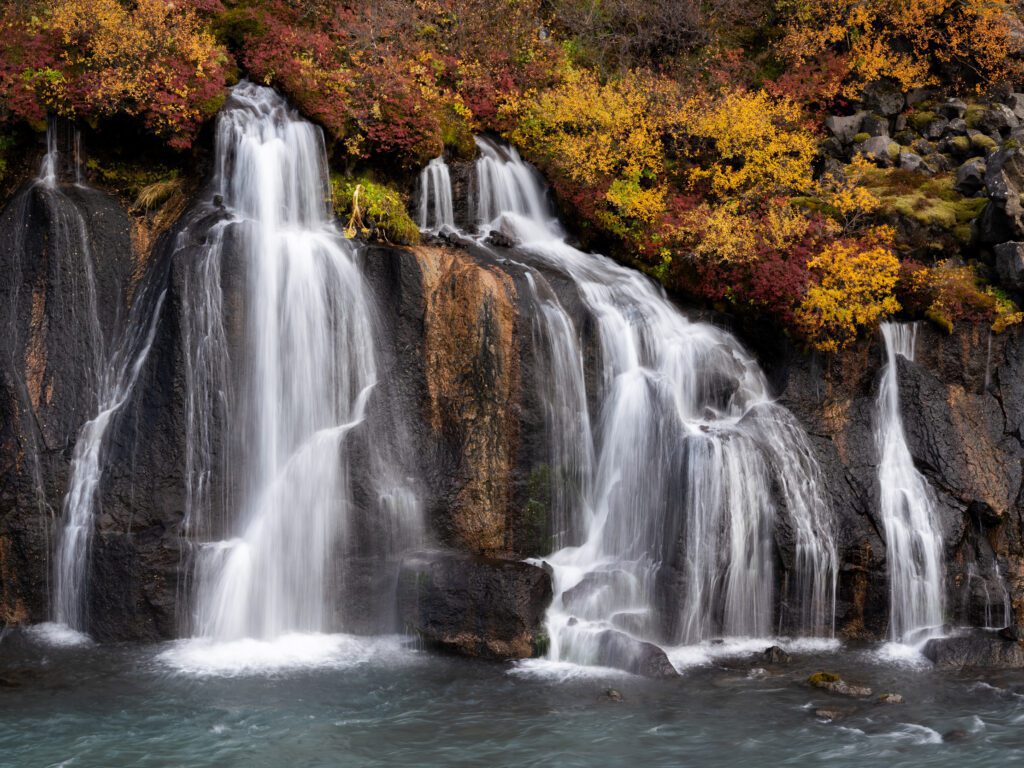
Flying in front of Háifoss in Iceland.
Mavic 4 Pro Vs Air 3S At A Glance
| DJI Mavic 4 Pro | DJI Air 3S | |
|---|---|---|
| Weight | DJI Mavic 4 Pro1063 g | DJI Air 3S724 g |
| Class (EU) | DJI Mavic 4 ProC2 | DJI Air 3SC1 |
| Wind resistance | DJI Mavic 4 Pro12 m/s | DJI Air 3S12 m/s |
| Quoted flight time | DJI Mavic 4 Pro51 min | DJI Air 3S45 min |
| What I plan around | DJI Mavic 4 Pro35 to 42 min | DJI Air 3Sroughly 30 to 35 min (my estimate) |
| Main camera | DJI Mavic 4 Pro25MP 4/3 Hasselblad, f/2.0 to f/11 | DJI Air 3S12MP 1-inch, f/1.8 fixed |
| Telephotos | DJI Mavic 4 Pro70mm and 168mm | DJI Air 3S70mm |
| Best for | DJI Mavic 4 ProPrint and paid work | DJI Air 3SEnthusiasts and lighter travel |
If you’re weighing up other drones too, my guide to the best drones for every budget covers the whole range.
Same Wind Rating, Very Different Drones
DJI rates the Mini 5 Pro, the Air 3S and the Mavic 4 Pro for the same 12 m/s of wind. That’s the spec sheet. In Icelandic wind, the heavier drones hold their position far better.
The Mavic 4 Pro handles Icelandic wind better than any folding drone I’ve flown. A stiffer frame and better gimbal stabilisation make a real difference when you fly for hours a day in coastal conditions.
On very windy days, a Mini sometimes can’t hold its position at all, or worse, it starts flying backwards. It happened to me in the Highlands: I had to land one in a tricky spot, and we only got it back by hiking out to where I’d put it down. If it ever happens to you, here’s how I locate a crashed or lost drone.
The older Mini 4 Pro and DJI’s Lito X1 are rated lower still, at 10.7 m/s.

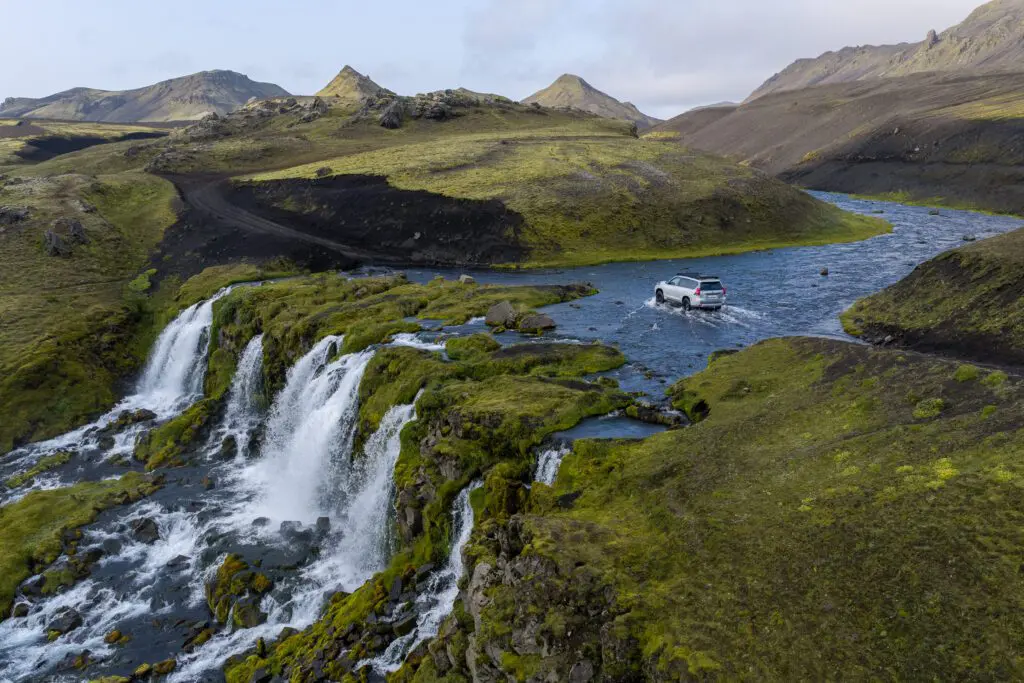
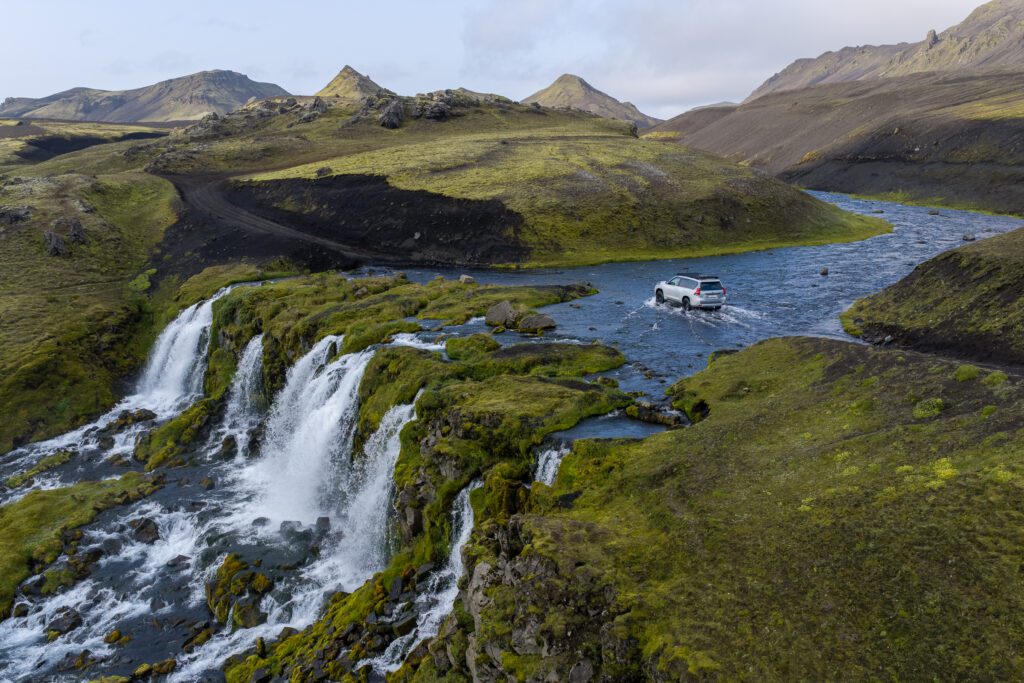
A highland river crossing. When a Mini lands somewhere awkward out here, you hike to get it back.
How Long Do Drone Batteries Last In Iceland?
Less than the box says, every time. DJI’s figure assumes perfect conditions and a battery flown flat. Nobody flies like that here.
These are my own numbers from my reviews, plus one estimate:
| Drone | DJI’s figure | Real conditions, from my reviews |
|---|---|---|
| Mavic 4 Pro | DJI’s figure51 min | Real conditions, from my reviews35 to 42 min |
| Mini 5 Pro, standard battery | DJI’s figure36 min | Real conditions, from my reviewsroughly 25 to 30 min |
| Mini 5 Pro, Plus battery | DJI’s figure52 min | Real conditions, from my reviewsroughly 38 to 45 min |
| Air 3S | DJI’s figure45 min | Real conditions, from my reviewsroughly 30 to 35 min (estimate) |
I haven’t flown the Air 3S enough myself to give you my own number, so that one is an estimate, based on the same drop I see on my other drones.
In strong wind, this is how I judge the way back. Straight after take-off I fly into the wind to see what speed I actually get, then make my best guess for the flight back. And I leave plenty of margin on the return time the controller recommends.
Batteries also age. I own 12 batteries, six originals and six newer ones, and there’s already a 20% capacity difference between the two sets. To be fair, I fly A LOT. That drop is exactly why I bought new batteries for my Mavic 4 Pro. If yours are a few years old, check them before you travel: look at the cycle count in the DJI Fly app, and do a test flight at home to see how long they really last.
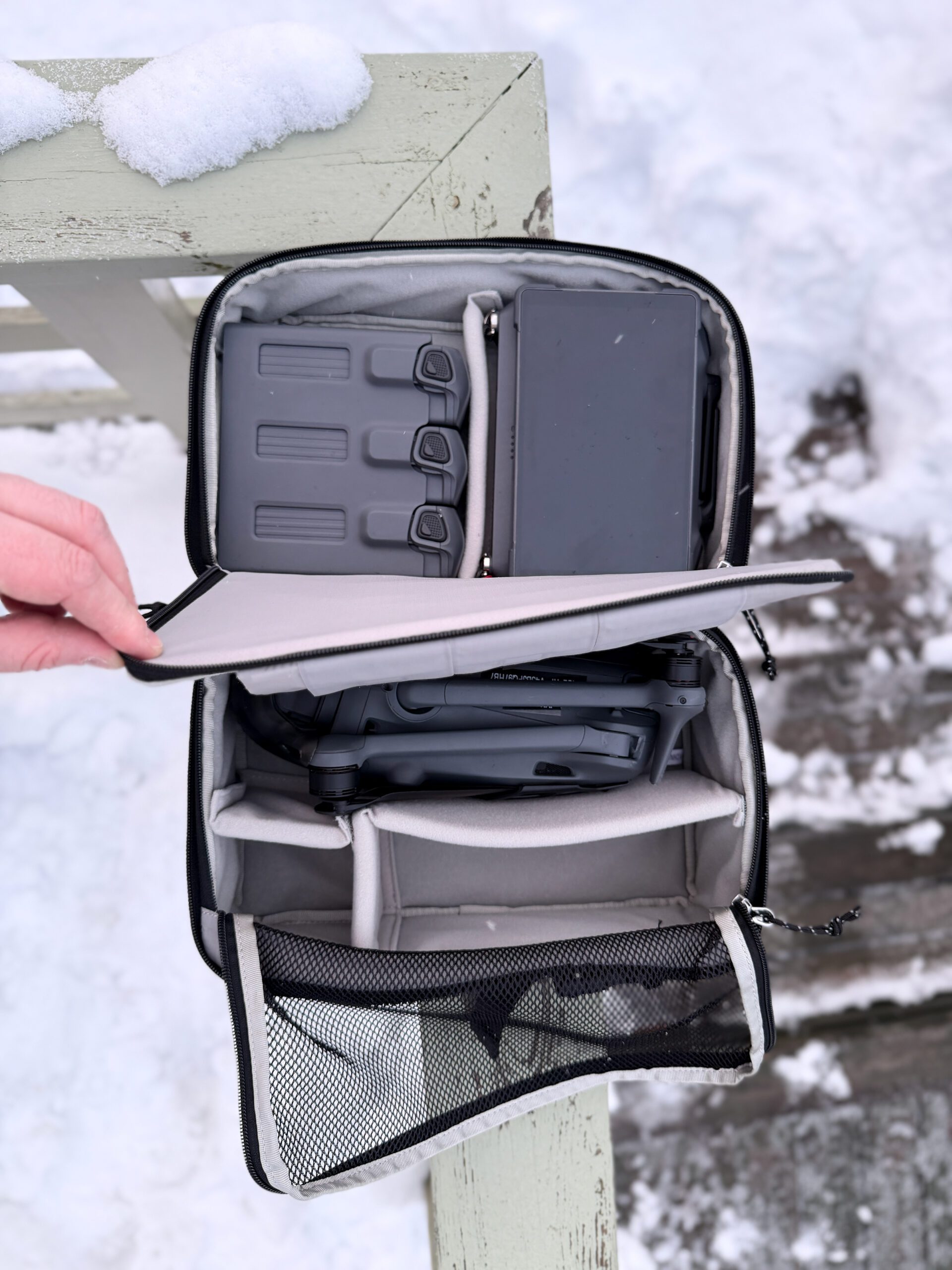
My Mavic 4 Pro and three spare batteries packed in the f-stop Drone Case XL.
Always Check The Gust Forecast
Look at the gust forecast before the average wind speed. Gusts are what catch drones out, especially near mountains and along the coast, where they can be a lot stronger than the average.
In Iceland I combine Windy and vedur.is, and I always look at the detailed wind charts, because wind here can be super localised. Understanding the weather, and how certain places behave in certain weather, is key. Fog and low cloud are common here too, and I cover those in my guide to flying a drone in fog, mist and low clouds.
Then plan the flight around the wind direction. The rule I’d give anyone: never let the wind carry you out. If you fly downwind on the way out, the whole trip home is into a headwind, on a battery that’s already half empty, and that’s how drones get lost here. Fly out into the wind, or across it, so the wind helps you home.
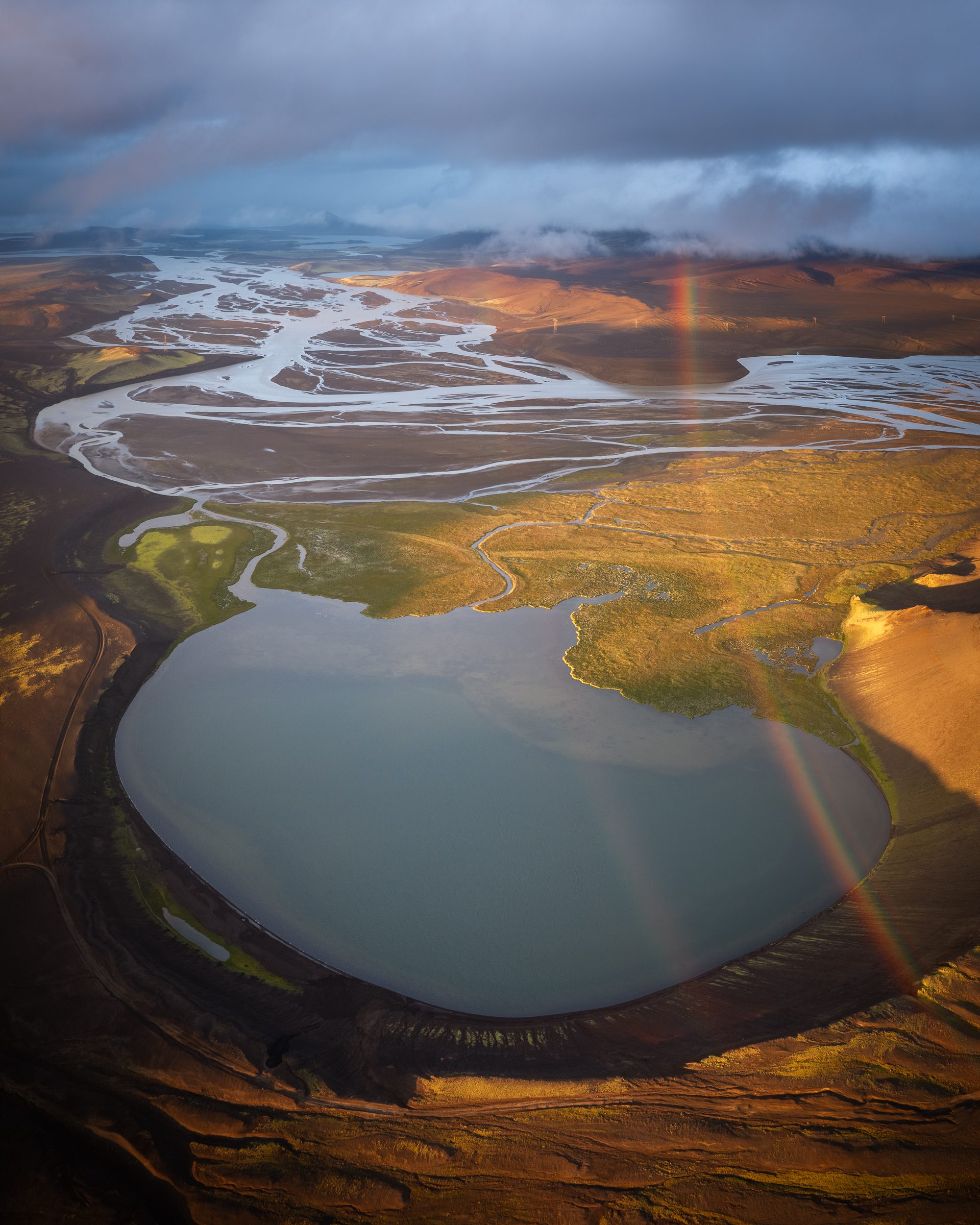
Rain and sun at the same time over a highland lake. Weather here changes fast.
Flight Settings I Change Before Flying In Iceland
- Return-to-home height, set per location. I set it so the drone clears the terrain around each spot, rather than using one height for the whole trip. Set too low, return to home can fly your drone into a slope or a cliff on the way back.
- Know how obstacle sensing behaves. In strong wind and complex terrain it can make the drone brake or hesitate. If I switch it off for a specific manoeuvre, I do it deliberately, only after weighing up the risks, and I switch it back on straight afterwards.
- The same goes for AirSense. Turning it off gives you a little extra battery, but you lose the warnings about nearby aircraft. If you do it, keep looking and listening for helicopters and light aircraft.
- Normal mode, not Sport. I only switch to Sport mode to fight the wind on the way home.
- I land on the first warning. When the drone warns me about a low battery or a weak signal, I bring it back. I never push past it.
If you’d rather learn all of this in the field, I teach it on my drone photography workshops.
Setting up the Mavic 4 Pro on the car bonnet in the Icelandic Highlands.
How High Can You Fly In Iceland?
Iceland follows the EU rules here: 120 metres above the closest point of the ground, not above the spot you took off from. In mountains and over glaciers, that difference matters a lot.
The problem is the drone itself. Every C0 drone, like a standard Mini 5 Pro, is capped by its firmware at 120 metres above its take-off point. Take off at the foot of a mountain and it stops climbing, even when you’re well within the legal limit above the slope beneath you. I wrote about this in detail in my post on the DJI Mini altitude limit.
C1 and C2 drones, like the Air 3S, the Mavic 4 Pro and the new C1 Mini 5 Pro Combo Plus, aren’t held to that fixed take-off cap: you can set a higher limit yourself. The legal limit of 120 metres above the ground still applies to all of them.

Meltwater and mountains. This is the terrain where the 120 metre take-off cap on C0 drones gets in the way.
Fly These With Me
Drone Photo Workshops In Iceland & Greenland
The quickest way to find out whether a drone suits you is to fly it somewhere worth photographing. That’s what my Iceland and Greenland workshops are for. I’ll show you where I fly and why I keep some images and delete others.
If a trip up north isn’t on the cards, the Drone Photography Masterclass I made with Nigel Danson covers the same workflow at home: 17+ hours of lessons on planning, flying, composing and editing, with RAW files to practise on.

Camera Settings I’d Think About In Iceland
- I shoot the Mavic 4 Pro at 25 megapixels and never use its high-resolution mode. The high-resolution files give you less colour depth, the drone is slower to shoot them, and they don’t add any real sharpness or detail. When I need more pixels for a large print, I upscale the 25 megapixel file in post and get the same result.
- I bracket whenever the contrast is harsh. That way I leave the scene knowing I have everything I need for the final image.
Sharp Images In Wind
When it’s gusty, I keep my shutter speed at 1/400s or faster. Wind shakes the drone, and the slower the shutter, the more that shows in your images. When I do need a longer shutter speed, I switch to burst mode and fire off a series, so at least one of them comes out sharp.
Panoramas
I almost always shoot panoramas in Iceland, by hand rather than with the drone’s panorama mode (here’s why I never take automatic panoramas with my drone). I cover my whole technique, from shooting to stitching, in my Drone Photography Masterclass and in my nature drone photography e-book.

Braided rivers threading a black sand plain in the Icelandic Highlands.
Polarisers: Think Twice On A Rotating Gimbal
On the Mavic 4 Pro I avoid ND-PL and CPL filters. Rotate the gimbal into vertical mode and the polariser is 90 degrees off, so the glare on glacial rivers comes straight back. I explain it fully in why I avoid ND-PL and CPL filters on the Mavic 4 Pro.

A volcanic cone casting a long shadow across the Icelandic Highlands.
What Your Drone’s Class Means In Iceland
Iceland follows the EU/EASA Open Category rules, so whether your drone is a C0, C1 or C2 decides where you can fly it. In short:
- Any drone with a camera: you register as an operator (ISK 5.863, valid five years), even if it’s under 250 grams. Over 250 grams, you also need the free A1/A3 licence.
- C1, like the Air 3S or the Mini 5 Pro Combo Plus: that free licence is all you need.
- C2, like the Mavic 4 Pro: with just the A1/A3 licence, you fly in the A3 subcategory, which means staying 150 metres from residential, commercial and recreational areas. To fly closer to people you need the A2 certificate, self-study and practical training, then an in-person exam (ISK 7.462). That lets you fly 30 metres from uninvolved people, or 5 metres in low-speed mode.
- Everywhere: 120 metres above the ground, and protected areas have their own rules and seasons.
Rules change, so check the latest before you fly. I keep everything up to date in my Iceland drone laws guide, including the protected areas and nesting seasons that catch a lot of visitors out.
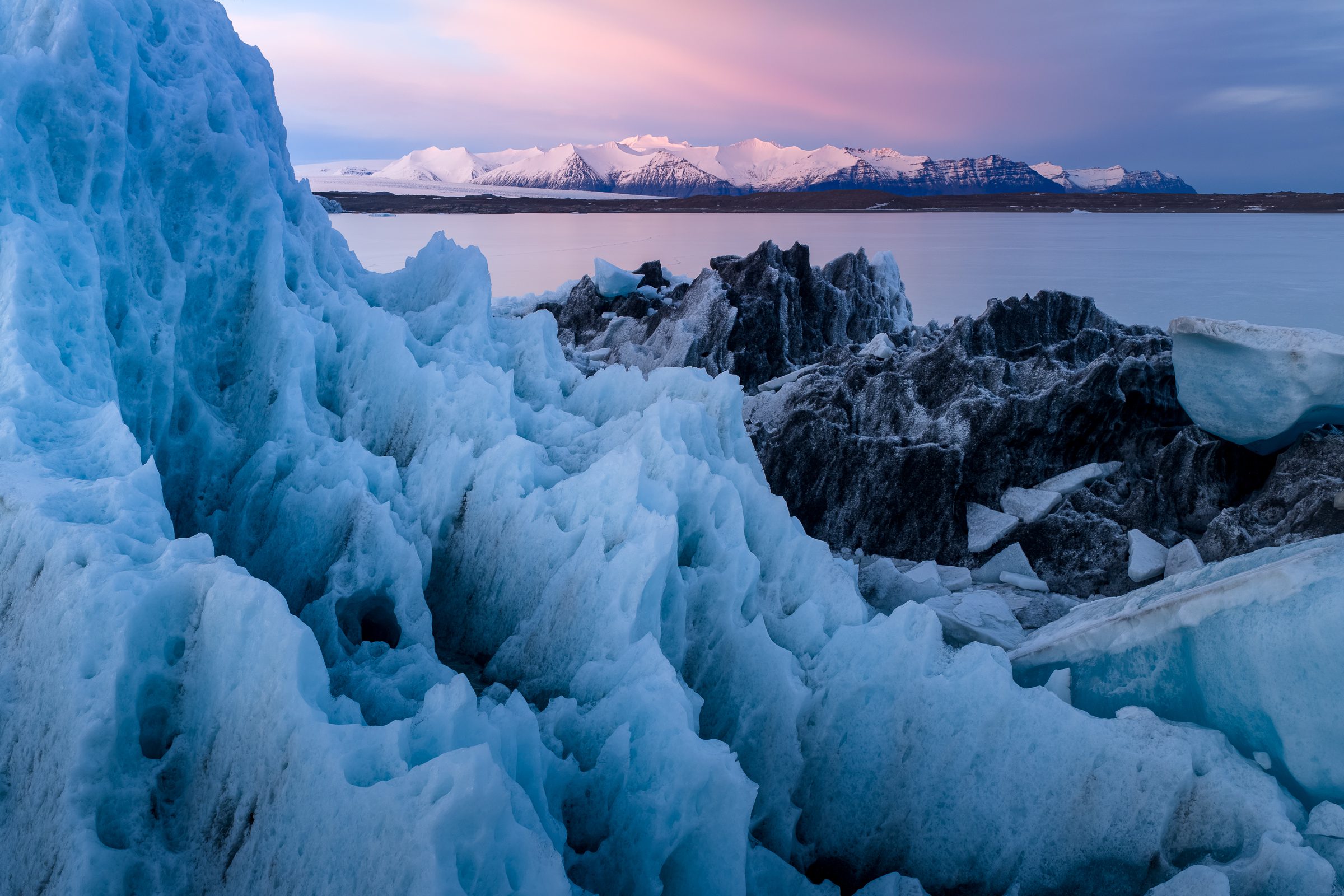
An iceberg in Fjallsárlón, South Iceland. Check the rules for each location before you fly.
Batteries & Charging On An Iceland Trip
Whichever drone you bring, get a Fly More Combo. The extra batteries alone make it worthwhile once you’re away from mains power for a few days. With the Mavic 4 Pro I rarely need more than two batteries for a typical shoot. If you already own one, extra Mavic 4 Pro batteries are the first thing I’d add.
To keep everything charged away from the grid, I use the DJI Power 2000. For storage in the field I use the f-stop Drone Case XL.
On really cold days I keep the batteries in wool socks, with hand warmers in the bag next to them. As long as the batteries stay warm in your bag, you don’t need any other precautions. I’ve flown at -38°C without issues that way, and once you’re flying, the batteries heat themselves.
DJI doesn’t recommend flying in rain or snow, but you can, as long as you wipe the drone down after the flight. Moisture in your bag is the bigger enemy.
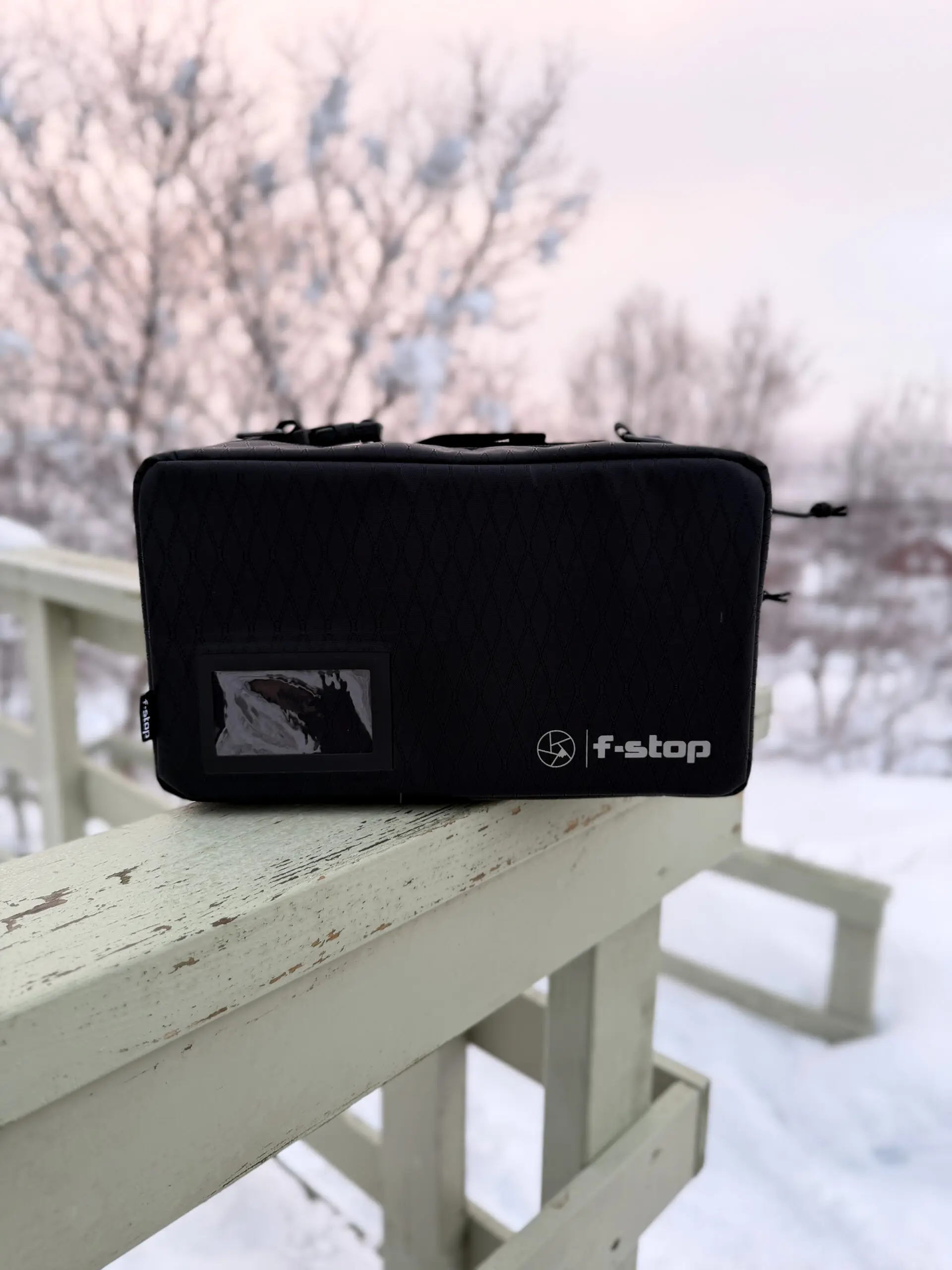
My f-stop Drone Case XL on a snowy day. Keep moisture out of your bag.
If Your Drone Breaks In Iceland
Drones break, especially if you fly as much as I do. On my own Mavic 4 Pro, one folding arm mechanism broke inside the body. The repair went smoothly and DJI fixed it within days, but that’s exactly why I carry a backup. People carry a spare camera body, so why not a spare drone? Drone shops in Iceland are pretty much limited to Reykjavík, which is a problem when you’re far from the capital.
Two things I’d sort out before you travel:
- Insurance. Check that your travel insurance covers your drone, including crashes and flyaways. If it doesn’t, get separate cover.
- A backup drone. I always have one: a spare Mavic 4 Pro linked to my own account, and a backup Mini 5 Pro that guests on my workshops can use.

My Mavic 3 Pro and Mavic 4 Pro over the lupins in Iceland. I always bring a backup.
My Pre-Trip Checklist
- Update the firmware at home, not on location, where you might not have the connection for it.
- Pack spare propellers and memory cards.
- Check your older batteries: cycle count in the app, plus a test flight at home.
- Put your operator ID on the drone. The registration number has to be on the airframe before you fly.
- Read up on the rules. My Iceland drone laws guide has the latest, including the protected areas.
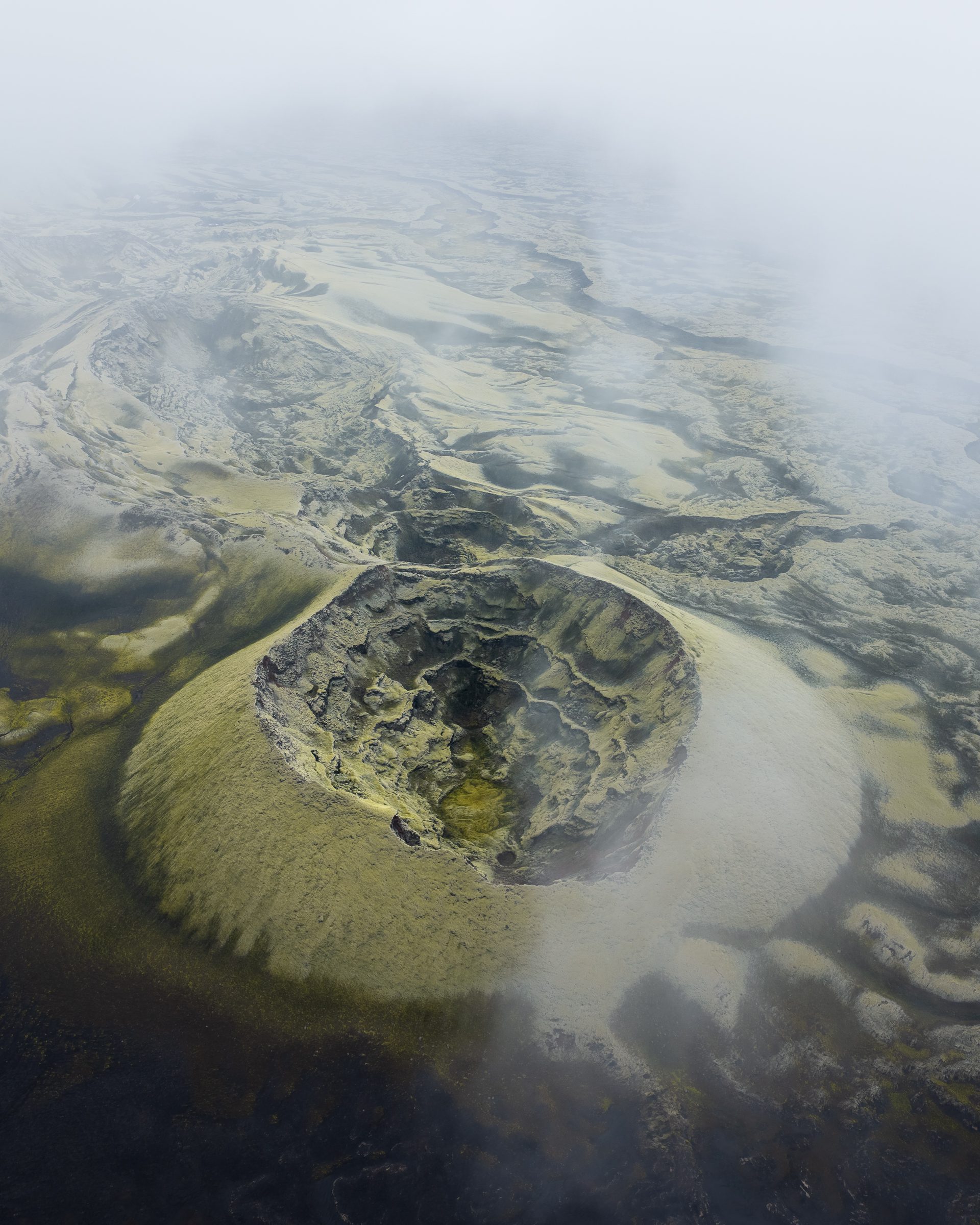
Fog drifting over a moss-rimmed crater in the Icelandic Highlands.
Frequently Asked Questions
What Is The Best Drone For Iceland?
For serious photography, the DJI Mavic 4 Pro, because it handles wind better than any folding drone I’ve flown and has the widest range of focal lengths. For a lighter drone that still copes with wind, the DJI Air 3S. Both are rated for 12 m/s.
What Is The Best Drone For Windy Conditions?
Of the folding drones I’ve flown, the DJI Mavic 4 Pro holds its position best in strong wind. The DJI Air 3S is very good in wind too, at 724 grams. Both are rated for 12 m/s. A sub-250 gram Mini has the same rating on paper, but it struggles in gusts and can even start flying backwards.
Can I Fly A Drone In Iceland?
Yes. Register as an operator, get the free A1/A3 licence if your drone weighs over 250 grams, stay under 120 metres above the ground and check the protected areas before you fly. My Iceland drone laws guide has the full rules.
How Long Does A Drone Battery Last In Iceland?
Less than the box says. DJI quotes 51 minutes for the Mavic 4 Pro, and in Icelandic wind and cold I get 35 to 42 minutes of usable flying per battery. For the Air 3S, I’d plan on roughly 30 to 35 minutes instead of the quoted 45.
What Drone Settings Should I Change For Iceland?
Set the return-to-home height for each location so it clears the terrain, stay in Normal mode and keep Sport mode for fighting the wind home, and land on the first low-battery or signal warning. Only switch off obstacle sensing or AirSense deliberately, after weighing up the risks, and switch obstacle sensing back on afterwards.
Do I Need A Licence To Fly A Drone In Iceland?
If your drone has a camera, you register as an operator, even if it’s under 250 grams. Over 250 grams, you also need the free A1/A3 licence. A C2 drone like the Mavic 4 Pro needs the A2 certificate to fly closer to people.
My Verdict
In Iceland, wind decides which drone you should bring. For me that’s the Mavic 4 Pro. It isn’t the lightest drone I could carry, but it’s the one I trust when the wind picks up. If you want something lighter, the Air 3S is the one I’d point you to, and if it has to be a Mini, make it the C1 Combo Plus.
I love flying in Iceland because there’s so much versatility to it.

A deep blue crater lake in the ochre hills of the Icelandic Highlands.
DISCOUNT
The Drone Photography Masterclass – Video Course
Nigel Danson & Jeroen Van Nieuwenhove‘s complete drone photography video masterclass will explore everything you need to know to start creating the best aerial photographs using any type of drone in more than 55 videos. Whether you are a complete beginner or an advanced drone pilot, this video course contains a vast amount of information to level up your drone photography skills.
Learn Drone Photography With My E-Book
Want to learn how to get the best results with your newly purchased drone? I wrote the most comprehensive guide available on drone photography which teaches you a technique to get the DSLR-like results out of even the cheapest drones.
In 125 detailed pages I explore everything you need to know to start creating the best photographs using any type of drone. Whether you are a complete beginner or an advanced drone pilot, this e-book contains a vast amount of information to level up your drone photography skills.
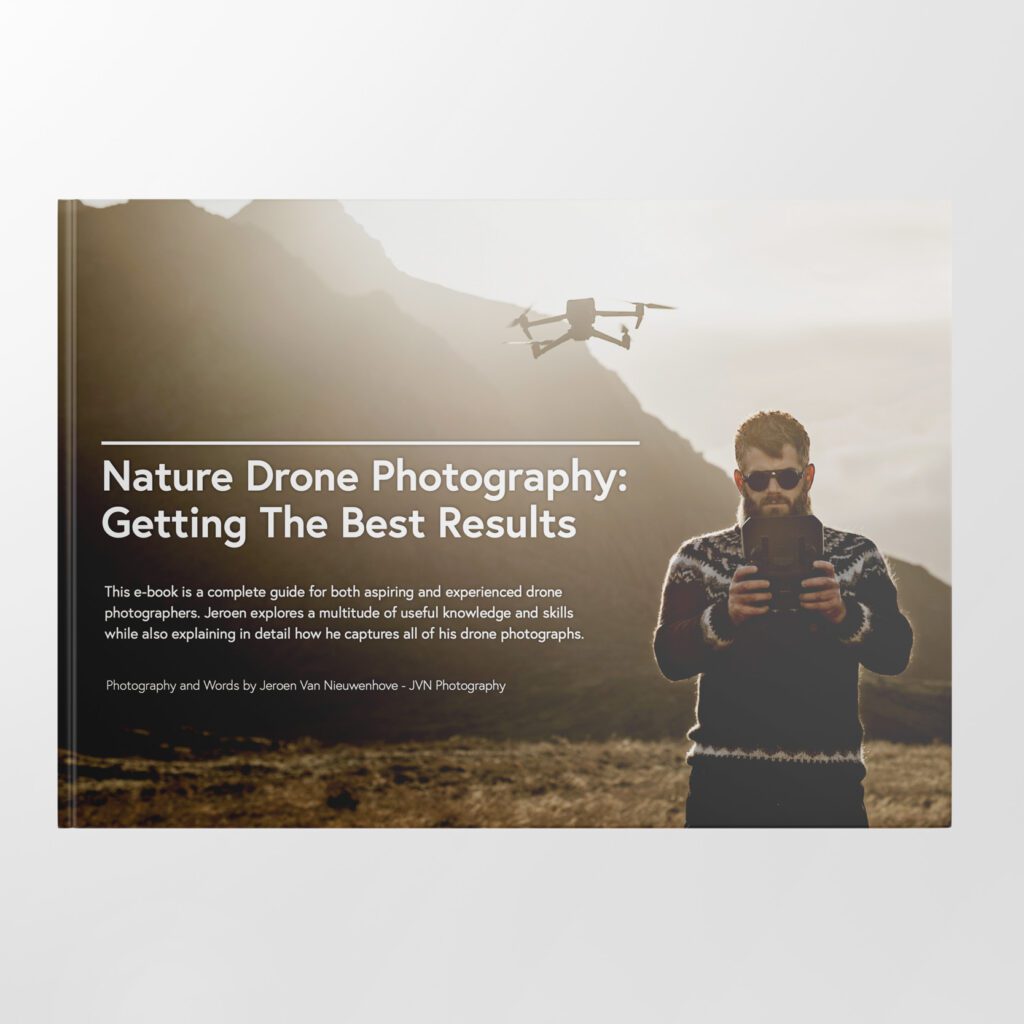
What to Expect?
- A 125-page educational PDF about nature drone photography with very detailed explanations
- Which drone to get for photography and why
- Important settings and configuration options
- A list of useful skills & tips
- A list of useful accessories and what not to buy at all
- How to research locations for drone photography
- How to compose with a drone and insight into Jeroen’s thought process with plenty of examples
- Thoughtfully planning ahead for your drone shoot
- The how and why of creating bracketed images
- The how and why of shooting HDR panoramas
- What challenges you might face and how to deal with them
- Common mistakes & how to deal with them
- How to stitch your panoramas together
Use EBOOK20 to get 20% off your Nature Drone Photography (E-Book) purchase!


Discover Jeroen’s Photo Workshops in Iceland, Greenland & Beyond
Ready to take your photography to the next level? Join me, Jeroen Van Nieuwenhove, on unforgettable photo workshops in Iceland, Greenland, Antarctica and other exciting destinations. Whether your passion is wildlife photography, bird photography, landscape adventures, or mastering drone photography, each workshop is designed to give you hands-on guidance in some of the world’s most spectacular locations.
From puffins in the midnight sun to Arctic foxes in the wild, from glaciers and volcanoes to dramatic coastlines seen by drone – these journeys are more than workshops; they’re once-in-a-lifetime experiences. Group sizes are kept small, ensuring personal mentoring and plenty of shooting opportunities.
Looking for something specific? Check out Jeroen’s…
- Wildlife & Bird Photography Workshops (Puffins, Arctic Foxes)
- Drone Photography Workshops
- Photo Workshops in Iceland
- Photo Workshops in Greenland
- Photo Workshops in Antarctica
Spots are limited – secure your place today!
Are You Looking For A Specific Photo Workshop?
All Upcoming Photography Workshops With Jeroen
Explore all upcoming photography workshops with Jeroen and take your skills to the next level in some of the world’s most extraordinary locations. From the volcanic landscapes of Iceland to the ice-filled fjords of Greenland and the wildlife-rich polar regions such as Antarctica, each workshop is designed to help you grow creatively while experiencing unforgettable moments in the field. Browse all upcoming departures below and find your next adventure!
LAST SPOT
LAST SPOTS
OPEN FOR BOOKINGS
OPEN FOR BOOKINGS
OPEN FOR BOOKINGS
LAST SPOTS
WAITLIST
WAITLIST
WAITLIST
WAITLIST
WAITLIST
WAITLIST
WAITLIST
WAITLIST
WAITLIST
What Previous Participants Shared About Their Experience
Choosing the right photography workshop is about more than just visiting iconic locations. It’s about experience, safety, timing, and personal guidance. Below you’ll find honest reviews from photographers who have joined me on landscape, wildlife & drone photo workshops in Iceland, Greenland and other locations. These testimonials reflect real experiences in small groups, hands-on instruction in challenging conditions, and the level of care Jeroen aims to bring to every workshop.


Support Jeroen’s Work
As an independent photographer, Jeroen partially relies on your support to keep producing worthwhile content such as blogs, photographs, books and much more. If you want to support his work, it is possible to do so by buying his e-books & books.
You can also sign up to the newsletter to stay up to date on new blog posts, projects, workshops and other interesting information.
Thank you for considering!