Disclaimer: some of the links in this article are affiliate links, which means I may earn a small commission if you buy through them, at no extra cost to you. As an Amazon Associate I earn from qualifying purchases.
Drone rules in Iceland follow the EU/EASA Open Category framework: you must register as an operator (ISK 5.863, valid five years), pass the free A1/A3 online exam, keep the drone within visual line of sight, stay below 120 metres above ground, and hold the distance your subcategory requires: 150 metres from built-up areas in A3, 30 metres from uninvolved people in A2. On top of that, Iceland adds its own layer. National parks and dozens of protected nature sites are seasonally restricted or closed to recreational drones, and since 17 May 2026 around fifteen of the most iconic locations issue no recreational permits at all. Always check the official map before you fly.
Flying a drone in Iceland in 2026 is more regulated and more misunderstood than ever. While Iceland now fully follows the EU drone framework under EASA, in force in Iceland since December 2024, local Icelandic drone laws, protected areas, and aviation rules still apply and are actively enforced. Much of the information online is outdated or incomplete. In this guide, I explain the current Iceland drone rules for photographers and videographers, focusing on what you can and cannot do when flying a drone in Iceland today. Let’s dive in!
Disclaimer: While I have done & will do my best to keep this article with rules and regulations up-to-date, information may change in the future. Always make sure to check the accompanied links too if you are unsure about something!
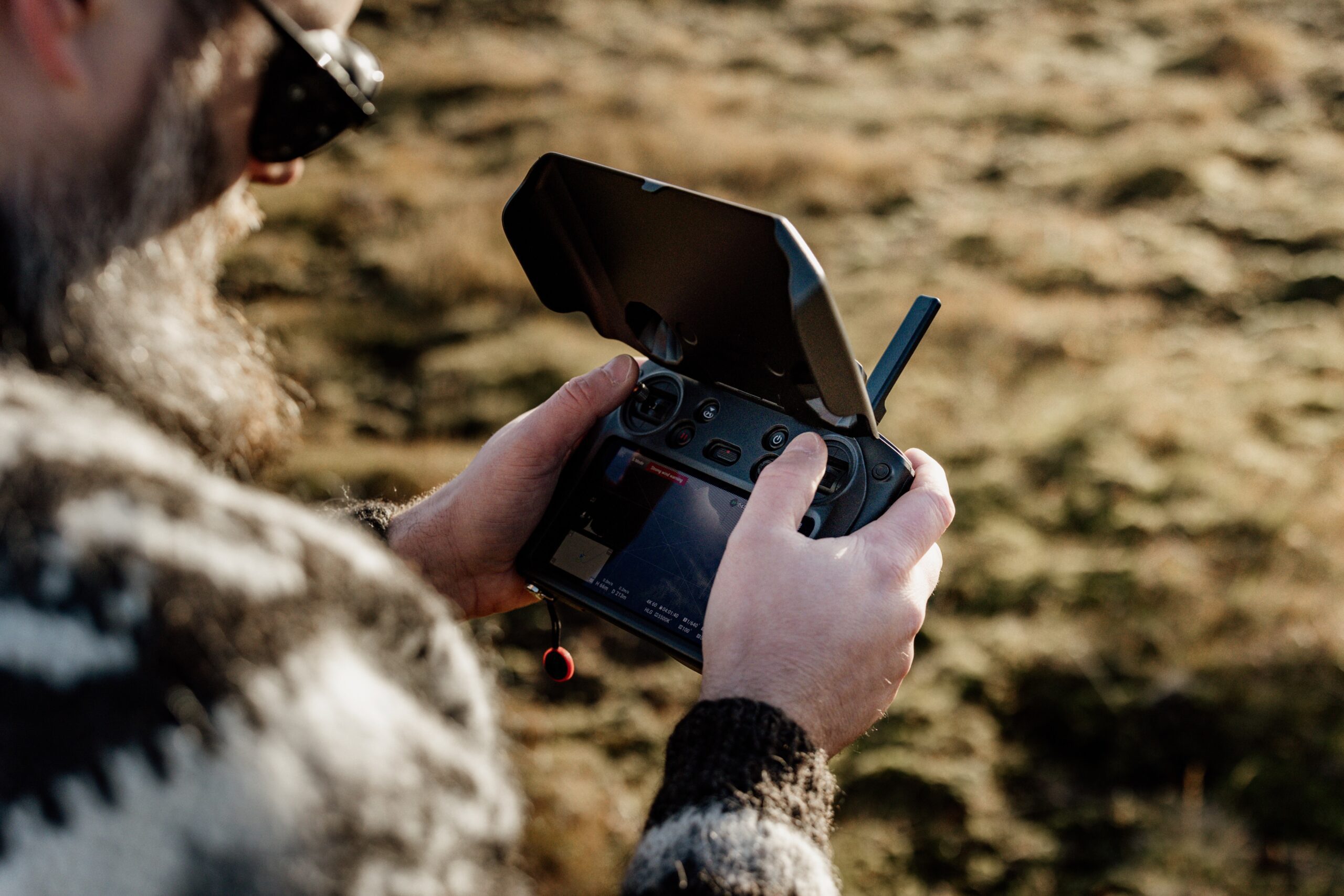
Special thanks to Shari Asselberghs for the cover image of this blog.
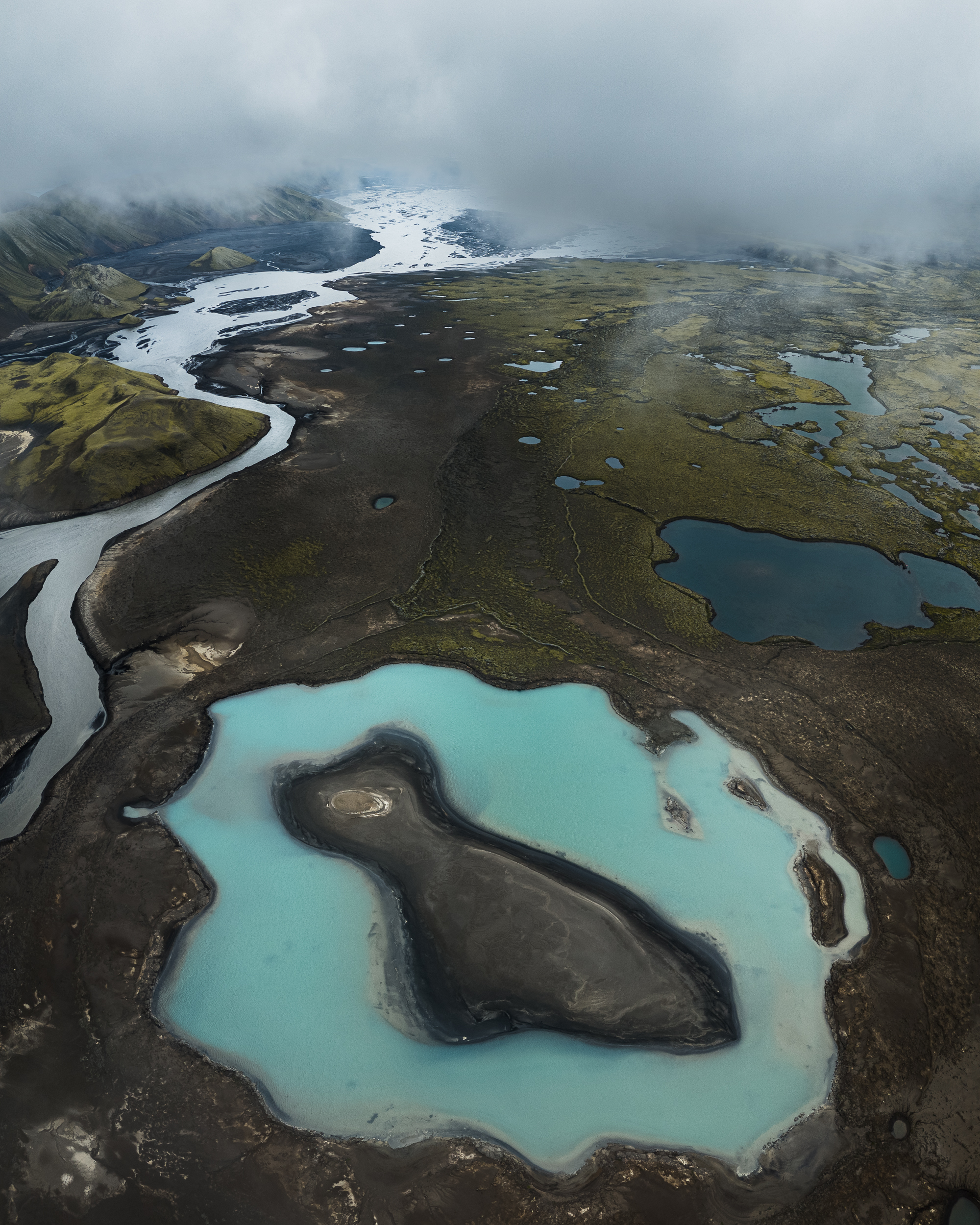
Drone photography can add an exceptional value to your photography portfolio, especially in the Icelandic Highlands. If you’d rather fly there with the permits and the driving already sorted, that’s what my Aerials of the Icelandic Highlands workshops are for.
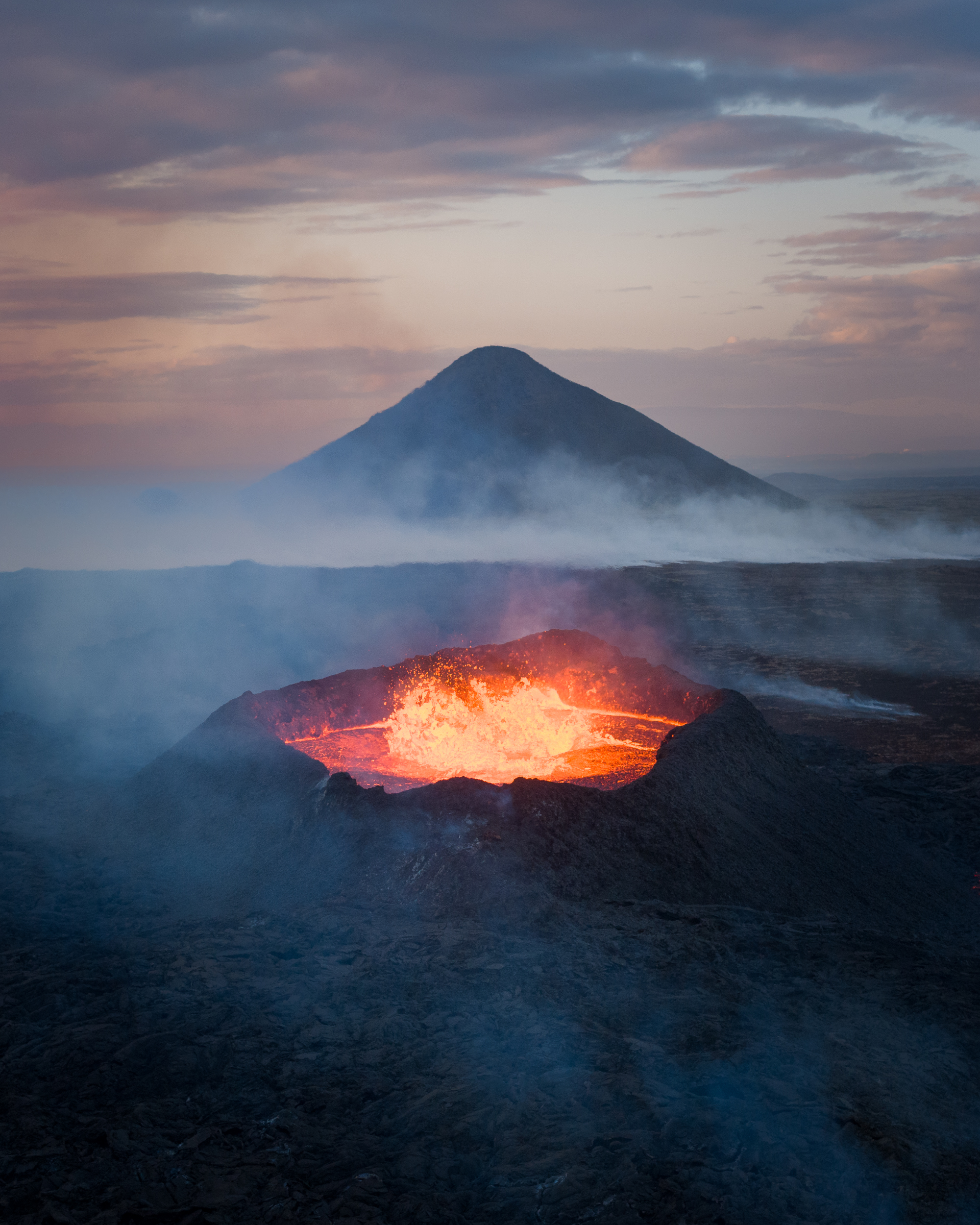
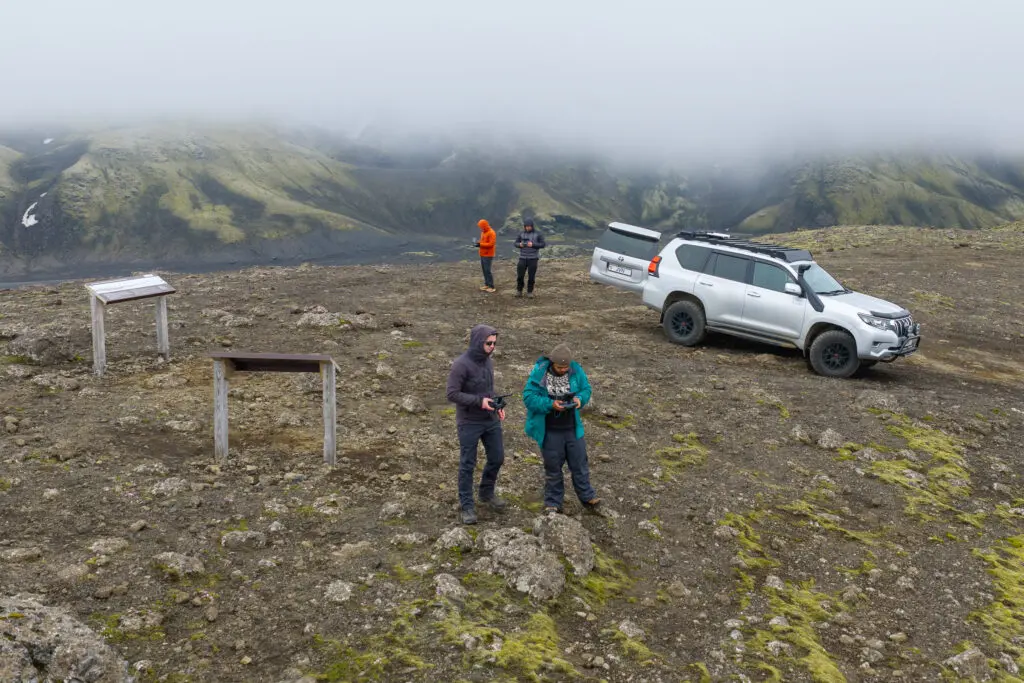
Some of my most compelling work has been taken using a drone, while flying above the various volcanic eruptions in Iceland during recent years.
Iceland Drone Rules At A Glance (Quick Reference)
If you’re visiting Iceland and just need to know the essentials before your trip, here’s the short version. The detail follows below.
What changed on 17 May 2026: Iceland’s Náttúruverndarstofnun (the Nature Conservation Agency) tightened how it processes drone permit applications inside protected areas. At around fifteen iconic sites (Gullfoss, Skógafoss, Goðafoss, Geysir, Dyrhólaey, Látrabjarg, Háifoss, the Mývatn protected area and more), recreational permits are no longer issued at all. Other protected areas have a seasonal closure on top. The wider EU/EASA framework everywhere else in Iceland is unchanged. Full breakdown below.
Before you arrive:
- Register as an operator with the Icelandic Transport Authority at Flydrone.is. Any EU or EEA national aviation authority works, and your registration is valid across the bloc. Registration costs ISK 5.863 (about €38), lasts five years, and is valid right across the EU/EEA.
- Take the A1/A3 basic exam online through the Icelandic Transport Authority. It’s free, available in English, and the test itself takes about half an hour.
- Check whether your insurance covers drone use in Iceland. Third-party liability cover is only legally required above 20 kg, or in subcategory A2 and above, so as a visiting photographer you are almost certainly not obliged to carry it. Not being obliged to carry it is not the same as it being a good idea, and most travel insurance excludes drone use by default.
- Check the age rule if anyone in your party is under 16. The minimum age to fly is 16. Under-16s may fly a sub-250 gram C0 drone in subcategory A1, or fly under the supervision of a registered pilot who holds A1/A3, and a legal guardian has to be the registered operator for a child’s drone.
The “big three” rules everywhere in Iceland:
- Visual Line of Sight at all times. You must be able to see your drone with your own eyes. Flying into cloud, fog, or beyond eyesight breaks the rules.
- Maximum altitude 120 metres above the closest ground point, with stricter limits in some controlled airspace zones.
- Keep your distance from uninvolved people. How far depends on which subcategory you are flying in, and those numbers are in the next block. Respect minimum distances from airports, helipads and emergency services too.
More rules that are easy to miss:
- In subcategory A3, stay 150 metres from residential, commercial, industrial and recreational areas. In A2 it is 30 metres from uninvolved people, or 5 metres if your C2 drone has low-speed mode and you are using it. Which subcategory you are in comes from your drone’s class marking, so check it before you travel.
- Mark the drone with your operator registration number. The number Flydrone.is gives you has to be physically on the airframe before you fly. A printed label is fine.
- Stay 150 metres from sensitive public infrastructure. Regulation 1360/2024 names power plants, substations, Parliament, the presidential residence, ministries, embassies, police stations, prisons and hospitals. Closer than that needs permission from whoever owns or runs the site.
- Airport restricted zones are the rule that catches Reykjavík. On airport premises, and inside the restricted zone around any scheduled airport, you need the operator’s permission unless you stay below the height of the highest obstacles and within 50 metres of your flight path. Permission goes to Isavia for Keflavík and to Innanlandsflugvellir ehf. for the other scheduled airports. Non-scheduled airports have no restricted zone, but the regulation still asks for maximum caution near their runways.
- You can go above 120 metres, but only next to a structure. The ceiling lifts if you stay within 15 metres of an artificial object and have the owner’s approval. Otherwise 120 metres from the nearest point of ground is the limit.
- Night flying is allowed, with a green flashing light on the drone. You still need visual line of sight, which in an Icelandic winter is the harder half of that sentence.
- Give way to all other air traffic, always. And follow any instruction from air traffic services, the police, the Coast Guard or the Transport Authority, on the spot and without arguing.
Where you can fly without a special permit (as long as you follow the rules above):
- Most of the public ring road and rural areas
- Most of the highlands outside protected nature reserves
- Many coastal areas outside national parks
- Areas not flagged as restricted on the Transport Authority’s map (with the caveats below)
Where flying is closed or restricted (and the authority):
- Vatnajökull National Park (under Náttúruverndarstofnun since 2025, but it still publishes and enforces its own drone rules): the general park is open to recreational flying, but Skaftafell, Jökulsárgljúfur and Askja are closed. Skaftafellsjökull, Jökulsárlón and Dettifoss have time-of-day windows.
- Þingvellir National Park core area (Þingvellir National Park administration): closed daily between 09:00 and 18:00 because of visitor density.
- Snæfellsjökull National Park (Náttúruverndarstofnun, the Nature Conservation Agency): closed 1 May to 15 September. Outside that window, applications can be made via island.is.
- Other iconic protected sites under Náttúruverndarstofnun (the Nature Conservation Agency): Gullfoss, Skógafoss, Goðafoss, Geysir, Dyrhólaey, Látrabjarg, Háifoss, the Mývatn protected area and others. No recreational permits issued, year round.
- Hornstrandir, Þjórsárver, Dynjandi, Flatey, Grótta and similar protected areas (Náttúruverndarstofnun, the Nature Conservation Agency): closed 1 May to 15 September.
- Friðland að Fjallabaki, the Fjallabak Nature Reserve (Náttúruverndarstofnun, the Nature Conservation Agency), which includes Landmannalaugar, Landmannahellir and Hrafntinnusker: closed 15 June to 15 September.
- Any temporary no-fly zone published as a NOTAM via Isavia, a Met Office advisory, or a civil defence directive.
The single thing most foreign visitors get wrong: assuming Iceland is “wild and open, so you can fly anywhere.” A surprising amount of the country is technically inside protected reserves or seasonal restriction zones that aren’t obvious from the road. Check before you fly, every time.
What Are The Drone Laws & Regulations In Iceland?
In Iceland, the European Union’s drone regulations are now also implemented. This means that everywhere in Iceland the same laws will apply as in the European Union. So what does this mean?
- If you are licensed within the EU, your drone license will cover flying in Iceland as well and you should already be aware of these rules. For example: if you are licensed in Belgium, your drone license will also be valid in Iceland.
- If you are not licensed within the EU yet, you can find the materials and take the basic A1/A3 exam online via the Icelandic Transport Authority’s drone website. The exam itself is free; the operator registration costs ISK 5.863 (about €38) and is valid for five years. More information can be found on island.is. Getting a license via the Icelandic Transport Authority means you also get a license that is valid in the EU.
There are, of course, also local regulations which apply in specific areas such as national parks and protected nature reserves, which I cover further down this article.
Which Drone Categories Are There Within The Icelandic Regulations?
The law splits drone operations into three categories: Open, Specific and Certified. Certified covers large aircraft and drones carrying passengers, so in practice you are choosing between the first two. The Open category involves all low-risk drone operations involving drones below 25 kilograms, which is what all consumer and prosumer drone users fall under. Most drone photographers and videographers use C0, C1 or C2 classified drones, which weigh up to 4 kilograms.
The specific requirements to be in the Open category are:
- The drone must weigh less than 25 kilograms.
- The drone pilot needs to maintain a visual line of sight (VLOS) with the drone at all times.
- You can not fly higher than 120 metres above the ground (not above the take off point).
- You can not fly over crowds of people.
- Dangerous goods can not be flown with them.
- You are not allowed to release objects from the drone.
- The drone must be marked with the registration number of the drone operator.
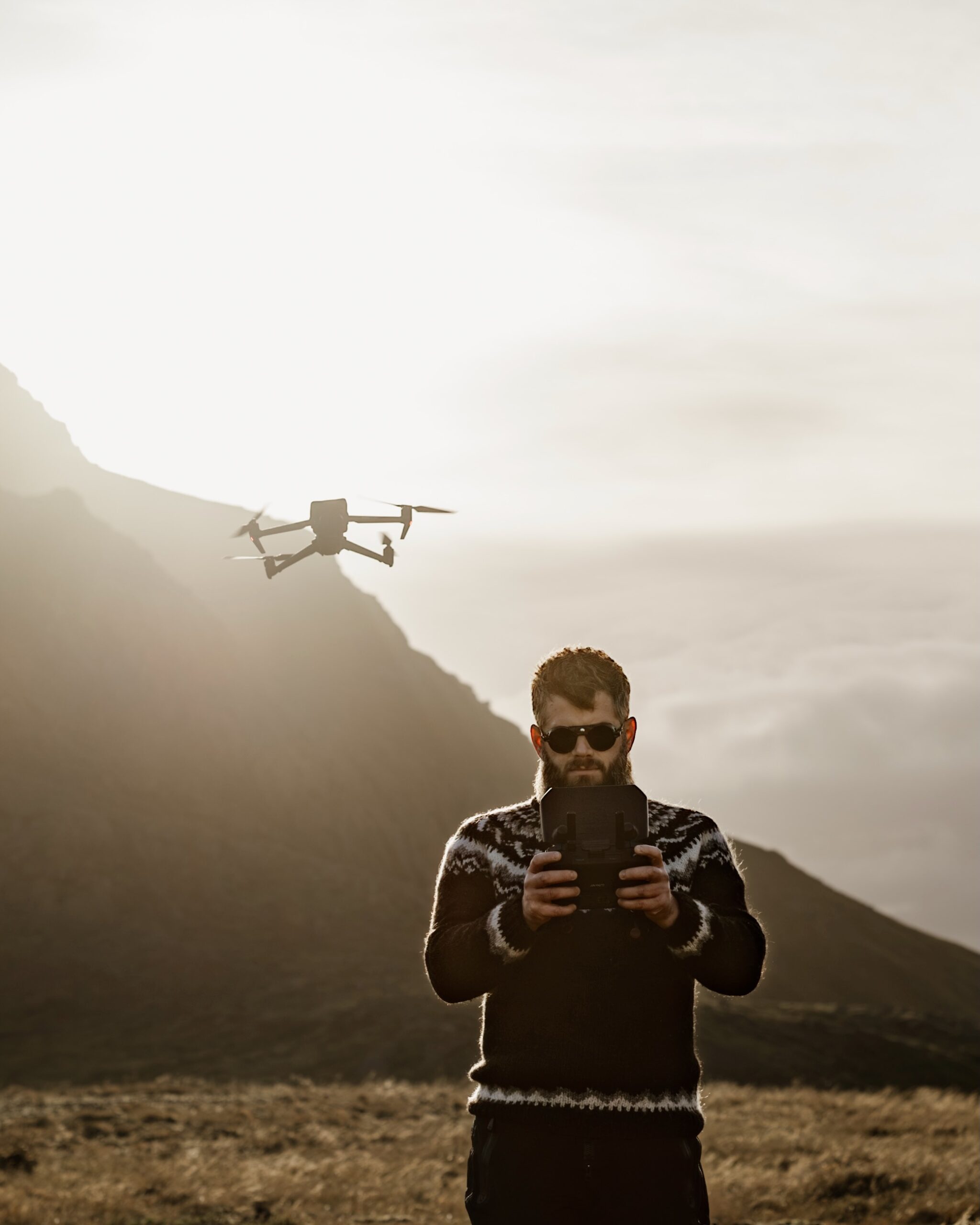
Drone rules and regulations can be quite confusing, especially when comparing different countries and even regions.
Which Subcategories Exist In The Open Category?
The Open category is divided into three subcategories: A1, A2 and A3. These categories are separated as follows:
- Subcategory A1: Fly light drones (up to 900 grams) with few distance restrictions to uninvolved people.
- Subcategory A2: Fly C2 drones in built-up areas, keeping at least 30 metres from uninvolved people, or 5 metres if the drone has a low-speed mode and you are using it.
- Subcategory A3: Fly drones up to 25 kilograms with a minimum of 150 metres from residential, commercial, industrial or recreational areas.
| Subcategory | Drone class | Maximum weight | Distance from people or built-up areas | Exam |
|---|---|---|---|---|
| SubcategoryA1 | ClassC0, and legacy drones under 250 grams | WeightUnder 250 grams | DistanceNever over assemblies of people | ExamNone |
| SubcategoryA1 | ClassC1 | WeightUnder 900 grams | DistanceNo flights expected over uninvolved people, never over assemblies | ExamA1/A3 |
| SubcategoryA2 | ClassC2 | WeightUnder 4 kg | Distance30 metres from uninvolved people, or 5 metres if the drone has a low-speed mode and you’re using it | ExamA1/A3, then A2 |
| SubcategoryA3 | ClassC2, C3, C4 and legacy drones | WeightUnder 25 kg | Distance150 metres from residential, commercial, industrial and recreational areas | ExamA1/A3 |
Depending on which drone you own, and how you will use it, you will need a specific license.
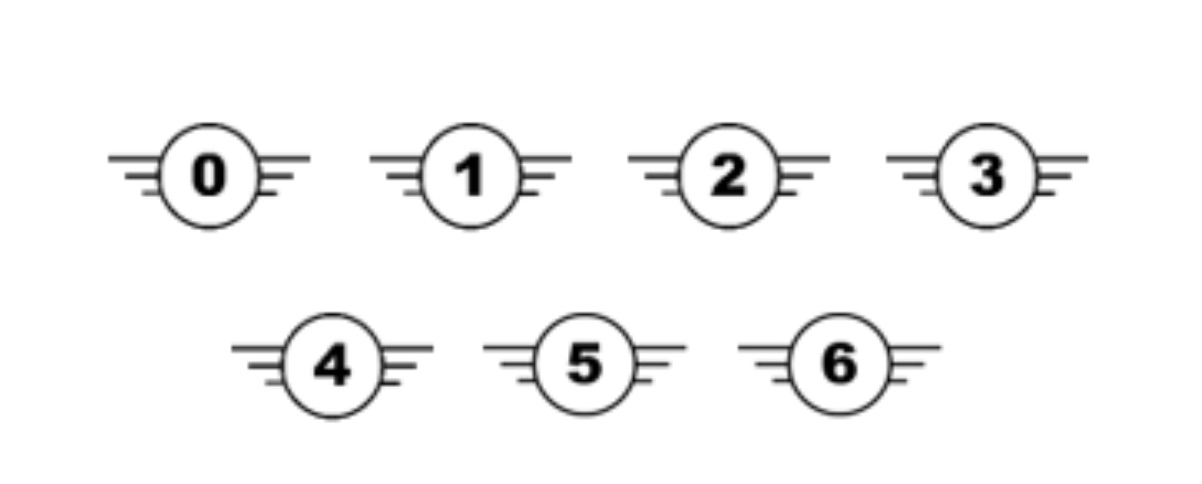
From 1 January 2024, new drones sold in the EU carry a C-class label; older drones without one fall under the legacy rules. C0 drones weigh less than 250 grams & are flown in subcategory A1. C1 drones weigh less than 900 grams & are flown in subcategory A1. C2 drones weigh less than 4 kg & are flown in subcategories A2 or A3.
Which Drone License Do I Need In Iceland?
In order to fly in the Open category, all drone pilots must be registered on the Icelandic Transport Authority’s website (flydrone.is). Depending on which drone you fly, you may need additional licensing.
Registration, Licence And Exam At A Glance
If you’re flying in Iceland in the next few weeks, this is the block to read. Every line in it is broken down properly further down the page.
| Requirement | Who needs it | Cost | Where you do it |
|---|---|---|---|
| RequirementOperator registration | WhoAnyone flying a drone of 250 grams or more, and anyone flying a drone with a camera | CostISK 5.863, about €38, valid five years right across the EU/EEA | WhereFlydrone.is |
| RequirementOperator number on the airframe | WhoEveryone who has registered | CostFree. A printed label is fine | WhereOn the drone itself, before you fly |
| RequirementA1/A3 exam | WhoAnyone flying a drone over 250 grams, so C1, C2 and C3 | CostFree | WhereOnline through the Icelandic Transport Authority, in English, about half an hour |
| RequirementA2 exam | WhoAnyone flying a C2 drone closer to people in subcategory A2 | CostISK 7.462 | WhereOnline course, then an in-person test at the Icelandic Transport Authority or another approved organisation |
| RequirementThird-party liability insurance | WhoLegally required above 20 kg, and in subcategory A2 and above. A visiting photographer in A1 or A3 doesn’t need it | CostVaries by insurer | WhereYour own insurer. Most travel policies exclude drone use by default |
| RequirementMinimum age | Who16 to fly. Under-16s may fly a sub-250 gram C0 drone in A1, or fly supervised by a registered pilot holding A1/A3 | Costn/a | WhereA legal guardian has to be the registered operator for a child’s drone |
| RequirementAn existing EU or EEA registration | WhoNothing further. Any EU or EEA national aviation authority works | CostNothing | WhereKeep the operator number you already have |
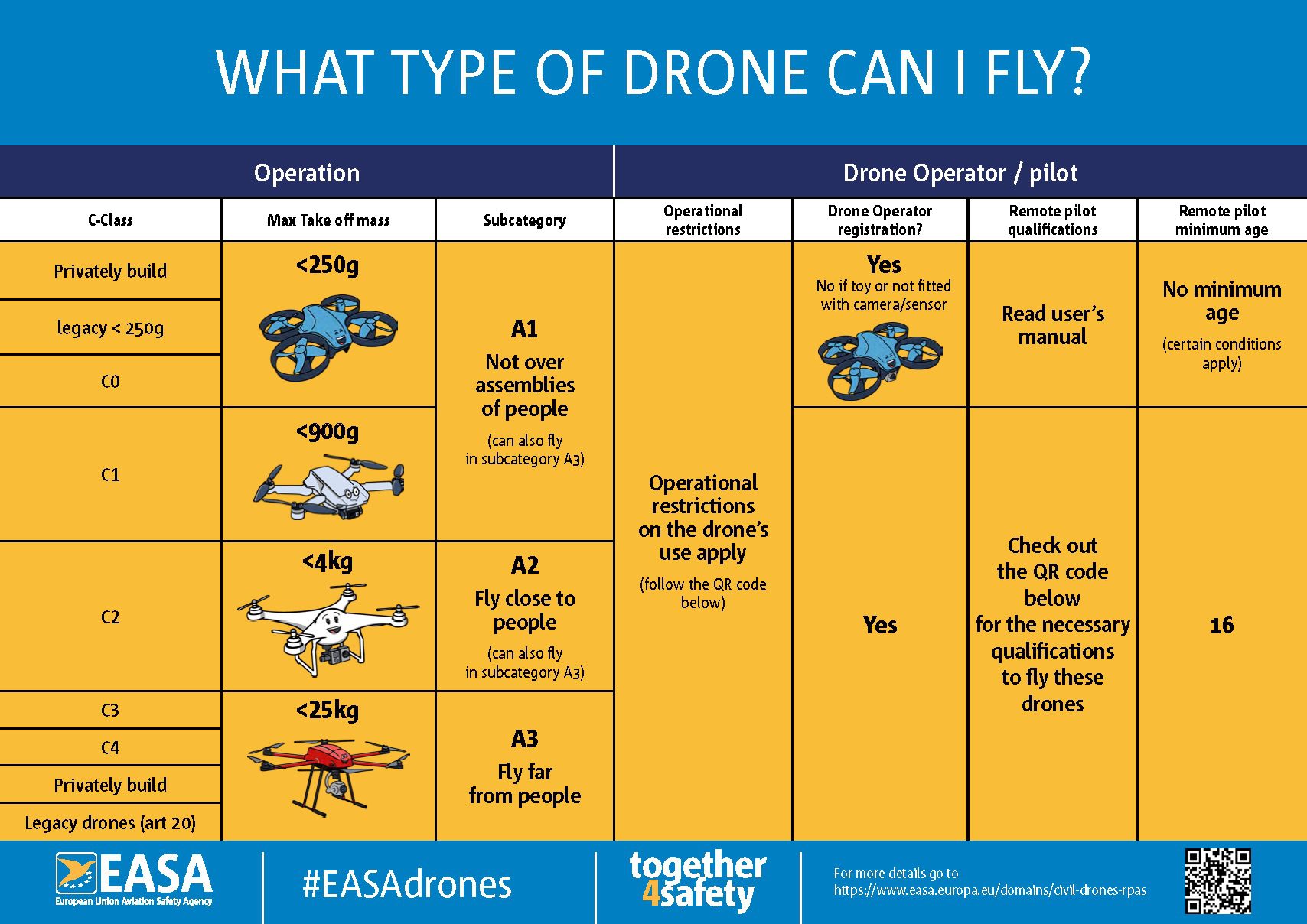
- If you are flying a sub-250 gram drone, such as the DJI Mini 3 Pro, DJI Mini 4 Pro or the DJI Mini 5 Pro, you do not need further licensing. This covers C0-labelled drones and older legacy drones under 250 grams alike. However, you still need to register as an operator before you fly!
- If you are flying a drone which weighs more than 250 grams, you must pass the A1/A3 exam. After passing the exam, drone pilots can fly drones up to 900 gr in subcategory A1 and up to 25 kg in subcategory A3. Such drones are labeled with a C1, C2 or C3 label.
- In subcategory A2 it is allowed to fly closer to people and therefore it is considered the subcategory in the Open category with the most risk. There are more requirements for pilot competency in the A2 subcategory and drone pilots must pass an additional A2 exam, which is an online course followed by an in-person test at the Icelandic Transport Authority or another approved organisation. Unlike the free A1/A3, the A2 costs ISK 7.462.
A more detailed explanation of the various drone categories and the accompanying rules and requirements, can be found on the Icelandic Transport Authority’s website.
What About C2 Drones Such As The Mavic 4 Pro?
It is important to know that users of a C2 drone, such as the DJI Mavic 3 Pro & DJI Mavic 4 Pro, who may be looking for an A2 license in addition to the A1/A3 license, can sit that exam in person at the Icelandic Transport Authority or another approved organisation. An A2 certificate held from any other EASA state is equally valid here. However, it should be noted that if you aim to fly out in nature, away from people, you can fly C2 classified drones in the A1/A3 category.
Where & When Can I Fly My Drone In Iceland?
You can fly anywhere, and anytime, in Iceland as long as you stick to the new European regulations. However, there are a few exceptions and things to keep in mind:
- You can not exceed 120 metres of altitude above the ground. It’s good to know that the altitude shown on your drone’s remote controller is the altitude from the takeoff point, not from the ground. This means that, in some cases, it can be difficult to know exactly whether you’re within the letter of the law or not.
- You may not fly on airport grounds or within the restricted zone around an airport without the operator’s permission. The exact boundaries are published in the AIP Iceland and on the Transport Authority’s drone map, and are largest at the main international airports. Do not rely on your drone to stop you at the boundary. Geo-fencing is a manufacturer setting, and DJI has been unwinding it since 2025. If you need to fly within such a restricted zone, you can ask for an exception via the Isavia website for Keflavík, or through Innanlandsflugvellir ehf. for the other scheduled airports.
- You must stay 150 metres from sensitive public infrastructure. Regulation 1360/2024 names power plants, substations, Parliament, the presidential residence, ministries, embassies, police stations, prisons and hospitals. Closer than that needs permission from the owner or operator.
- Inside the restricted zone around a scheduled airport, and Reykjavík city airport is one, you may fly without permission only if you stay below the height of the highest obstacles and within 50 metres of your flight path.
- You are allowed to fly at night but need to have a green strobe light on the drone to maintain VLOS (visual line of sight).
- In subcategory A3 you must keep at least 150 metres from residential, commercial, industrial or recreational areas. In subcategory A2 you must stay at least 30 metres from uninvolved people, or 5 metres with a C2 drone in low-speed mode.
- It is forbidden to fly your drone near bird cliffs, birds and other wildlife.
- Across Iceland’s protected nature reserves, drones are banned during the bird-nesting season without a permit, with most areas closed from 1 May to 15 September. Látrabjarg is stricter still and sits on the year-round list, where recreational permits are not issued at all. Check the official drone map for the exact dates where you plan to fly.
- Taking off from private land is only allowed with permission from the land owner.
- Finally, for some specific areas in Iceland additional permits are required, which I cover further down.
I fly these locations year-round on my drone photography workshops, where flying legally and safely is as much a part of the teaching as the photography itself.
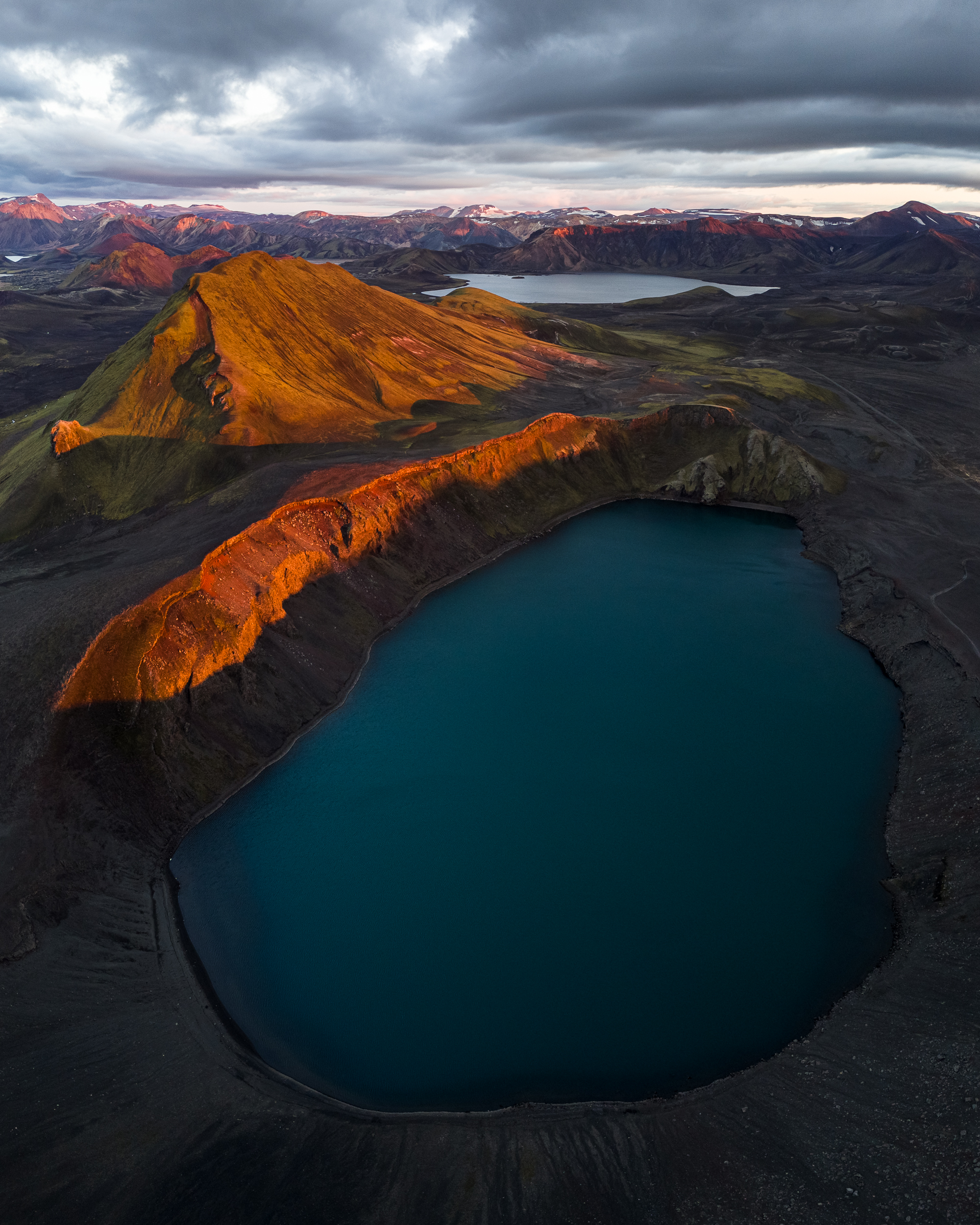
Iceland has some of the most stunning landscapes you can find on this planet. Photographing using a drone really puts the uniqueness into perspective.
Can I Fly A Drone At Iceland’s Most Photographed Places?
This is the question I get most often, and it is the one the official map answers worst. Here are the spots people actually ask me about, with the rule that applies to each one and who sets it.
| Place | Drone status | Season or hours | Who decides |
|---|---|---|---|
| PlaceSkógafoss | StatusNo recreational permits issued at all | WhenAll year | AuthorityNáttúruverndarstofnun |
| PlaceGullfoss | StatusNo recreational permits issued at all | WhenAll year | AuthorityNáttúruverndarstofnun |
| PlaceGoðafoss | StatusNo recreational permits issued at all | WhenAll year | AuthorityNáttúruverndarstofnun |
| PlaceDyrhólaey | StatusNo recreational permits issued at all | WhenAll year | AuthorityNáttúruverndarstofnun |
| PlaceLandmannalaugar | StatusInside Friðland að Fjallabaki. Professional purposes only during the closure. Outside it you can apply through island.is | WhenClosed 15 June to 15 September | AuthorityNáttúruverndarstofnun |
| PlaceJökulsárlón and Fellsfjara (Diamond Beach) | StatusClosed for nesting, then open inside published time-of-day windows with no permit needed | WhenClosed 15 April to 15 July. Windows vary by season | AuthorityVatnajökull National Park (under Náttúruverndarstofnun) |
| PlaceDettifoss | StatusWest bank only, inside time-of-day windows. The rest of Jökulsárgljúfur is closed | WhenNo time limit 1 November to end of February. Windows apply the rest of the year | AuthorityVatnajökull National Park (under Náttúruverndarstofnun) |
| PlaceÞingvellir core, Leirar to Þingvallavatn | StatusNo permits issued. Flying is allowed outside the closed hours | WhenClosed 09:00 to 18:00, every day | AuthorityÞingvellir National Park |
| PlaceReynisfjara | StatusNot on the Náttúruverndarstofnun drone list. The crowd rule usually decides it, and Dyrhólaey next door is closed | WhenAll year | AuthorityGeneral EASA rules |
| PlaceKirkjufell | StatusNot on the list. Heavy visitor traffic, and the parking sits on private land | WhenAll year | AuthorityGeneral EASA rules |
| PlaceBrúarfoss | StatusNot on the list. The approach crosses private land, so ask before you take off from it | WhenAll year | AuthorityGeneral EASA rules |
| PlaceHengifoss | StatusNot on the list. General rules apply | WhenAll year | AuthorityGeneral EASA rules |
One caveat that matters. A place not appearing on the Náttúruverndarstofnun list does not automatically make it open. The agency’s own wording is that permit requirements are then set by the rules for that specific area, so check the local authority as well. The full lists, and the areas not covered here, are in the protected-areas section below.
Do I Need Any Additional Permits To Fly My Drone In Iceland?
The short answer is ‘yes’, but it’s a bit more complicated than that.
Aside from the European drone regulations, there are also many local regulations in effect. These can be found in certain protected areas and national parks around Iceland. Some areas still allow you to apply for a permit online, though the process can take weeks and, in some cases, cost money. Others, after the 17 May 2026 procedural change, no longer issue recreational permits at all. To help you figure out which is which, I have collected the four main entities with some explanations below.
It’s also important to note that many of the more popular locations may not have any specific drone regulations but might be visited by a large number of tourists. This means in many cases that you can not fly your drone as this would mean you are flying over a crowd of people. However, if you fly outside the most crowded times, you can fly your drone if no local regulations are enforced.
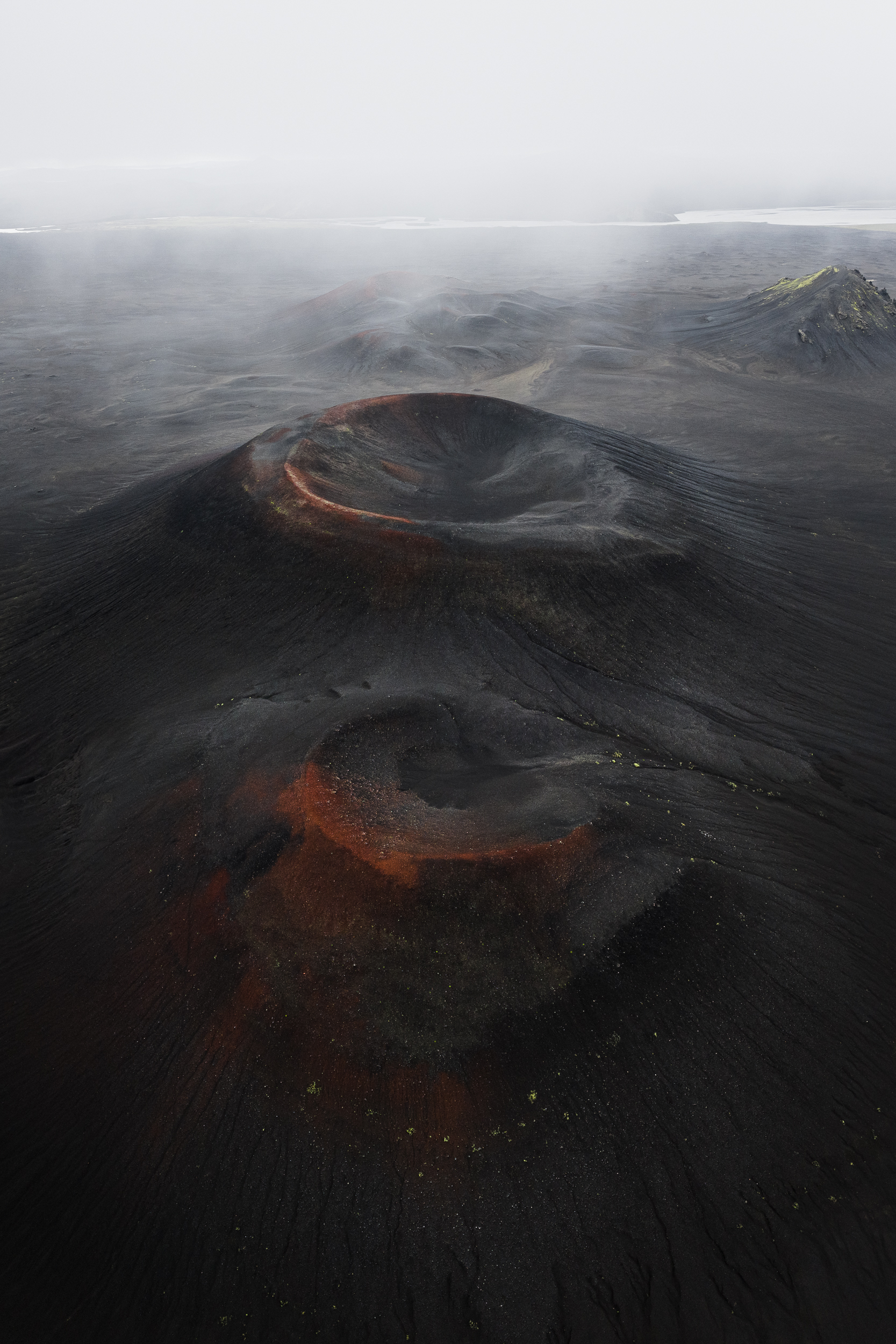
There are many photography locations in Iceland that really shine when you witness them from an aerial perspective.
Do I Need A Drone Permit In Vatnajökull National Park?
Vatnajökull National Park is the largest national park in Iceland and stretches from the southeastern part of the country all the way to Ásbyrgi in the north. This enormous area protects all natural wonders surrounding Vatnajökull glacier. It contains many popular locations such as, but not limited to, Jökulsárlón (Glacier Lagoon), Fjallsárlón, Fellsfjara (Diamond Beach), Ásbyrgi, Dettifoss, Selfoss, Askja, Langisjór, Eldgjá, and many other locations. A complete map of the whole Vatnajökull National Park is available on their website.

While I don’t find the aerial perspectives to be that interesting at the Jökulsárlón glacier lagoon, some might want to put up their drones so it’s good to know what the local regulations are.
For recreational use, a drone permit is no longer required. However, it is required to follow these guidelines, whilst also keeping in mind restricted areas:
- Flight times should be kept to a minimum and flights should be avoided during the area’s busiest times of day. A drone must never be flown near or over people, unless approval has been obtained (e.g. in organized group tours). Disturbing the experience of tranquillity, guest safety and personal privacy should be avoided.
- It is not allowed to disturb wildlife. If the flight unexpectedly disturbs birds or other wildlife, it must be stopped immediately.
- The conductor of the drone is fully responsible for the use of the drone. It must not harm people, wildlife, or nature, and it must not leave any permanent traces. If a drone is damaged or crashes, it and all its components must be collected and removed. If it is dangerous to recover a crashed drone, or it cannot be found, it must be reported to the national park.
- Many popular destinations in the national park are close to the national park boundary. The National Park has no jurisdiction outside of them, and therefore it is always the responsibility of the drone operator to check if a permission from landowners is needed.
- In other respects, the flight of unmanned aircraft shall be conducted in accordance with regulation no. 1360/2024, on the operation of remotely piloted aircraft and instructions on the Icelandic Transport Authority’ website.
- Regional restrictions still apply. Please check the Vatnajökull National Park website for an updated list of restricted areas.
Applying for a drone permit for commercial use within Vatnajökull National park, can be done via a special online application form. All applications have to be made at least 30 days in advance.
Vatnajökull is enormous, and the park applies different rules to different parts of it. If you’re flying inside the park boundary, the exact spot you’re standing in decides what you can do. The park publishes its rules in five numbered categories (I to V), and I’ll walk through them the way the park does, because if you ever need to read the source on the day you fly, the headings line up.
Category I - Recreational Flying Prohibited
- Skaftafell (Svartifoss, Skaftafellsheiði, Morsárdalur, Kjós and Skaftafellsfjöll), closed for bird protection, safety and visitor experience. The only exception is the area directly in front of Skaftafellsjökull glacier, which has its own time-of-day rules (see Category III).
- Jökulsárgljúfur (Ásbyrgi, Vesturdalur, Hljóðaklettar, Hafragilsfoss), closed for bird protection, safety and visitor experience. The west side of Dettifoss has its own rules (see Category V).
- Askja, closed to protect the quality of the visitor experience. Askja is one of the most atmospherically unique places in the country, and the park has decided that drones break the spell.
Category II - Verbal Permission From A Ranger On The Spot
At a handful of remote highland huts and service areas, a ranger can give you verbal permission to fly. They base the decision on current ecosystem conditions and time of day, and they tend to favour early mornings or late evenings when there’s less foot traffic. The areas covered are the service area at Drekagil huts, Herðubreiðarlindir, Hvannalindir, Kverkjökull, the service areas at Sigurðarskáli and Snæfell huts, Eldgjá and Laki. Just ask when you arrive.
Category III - Skaftafellsjökull Glacier Front & Time-Of-Day Rules
Flying is allowed in front of Skaftafellsjökull only, and only outside the busy hours of the day. The exact window changes with the seasons:
- 1 May to 15 September: before 09:00 or after 18:00
- 16 September to 31 October: before 10:00 or after 17:00
- 1 November to 28/29 February: before 11:00 or after 15:00
- 1 March to 30 April: before 10:00 or after 17:00
Category IV - Jökulsárlón & Fellsfjara (Diamond Beach), Seasonal & Time-Of-Day
This is the one most visiting photographers want to know. From 15 April to 15 July, the area is fully closed to drones because of bird nesting. There are no exceptions in that window. Outside that period, you can fly without a special permit, but only within the published time-of-day brackets:
- 15 July to 21 September: before 09:00 or after 18:00
- 22 September to 21 October: before 10:00 or after 17:00
- 22 October to 21 November: before 11:00 or after 15:00
- 22 November to 21 January: before 12:00 or after 14:00
- 22 January to 21 February: before 11:00 or after 15:00
- 22 February to 21 March: before 10:00 or after 17:00
- 22 March to 15 April: before 09:00 or after 18:00
A practical note: helicopter traffic at Jökulsárlón is constant. Manned aircraft always have right of way, and you’ll see a red-shaded area on the official park map covering the busiest visitor zone near the main viewpoint where flying is never permitted, even in your allowed time window.
Category V - Dettifoss (West Side Only)
The rest of Jökulsárgljúfur is closed (Category I), but you can fly over the canyon at Dettifoss itself, on the western bank, within the same kind of time-of-day brackets:
- 1 March to 30 April: before 10:00 or after 16:00
- 1 May to 31 August: before 08:00 or after 18:00
- 1 September to 31 October: before 10:00 or after 16:00
- 1 November to 28/29 February: no time-of-day restriction beyond the general park rules
Within the park boundary at Dettifoss you may only fly over the canyon. Do not fly further north than the northernmost viewing platform on the west side, and remember that the eastern bank and the area south of the falls is private land outside park jurisdiction (so the landowner’s rules apply, not the park’s).
A complete map showing the red-shaded restricted zones for Skaftafell, Jökulsárlón, Dettifoss and the rest sits on the official Vatnajökull National Park drone rules page. Check it before you fly. The park can also adjust restrictions seasonally, and the page is the only one that’s guaranteed to be current.
Do I Need A Drone Permit In Thingvellir (Þingvellir) National Park?
Thingvellir (Þingvellir in correct Icelandic) National Park is one of the most visited areas in Iceland, as it is considered to be a part of the Golden Circle. Regardless of this, the local rules in Þingvellir National Park are pretty straightforward. There are no specific permits required. There is, however, one restriction that covers the most popular locations within the park.
From the Service Centre at Leirar in the north to Þingvallavatn in the south of the national park, drone flying is not allowed between 9:00 and 18:00. This area is marked with a red circle on the map. This is due to the large amount of visitors in this area. This contains locations such as Hak, Almannagjá, Lögberg, Flosagjá, Öxarárfoss, the Þingvellir Church, Silfra and more.
In other areas of the national park, this limitation does not apply regarding drone flying. Though, they ask to keep in mind other visitors and especially animals.
More information can be found on the Þingvellir National Park website.
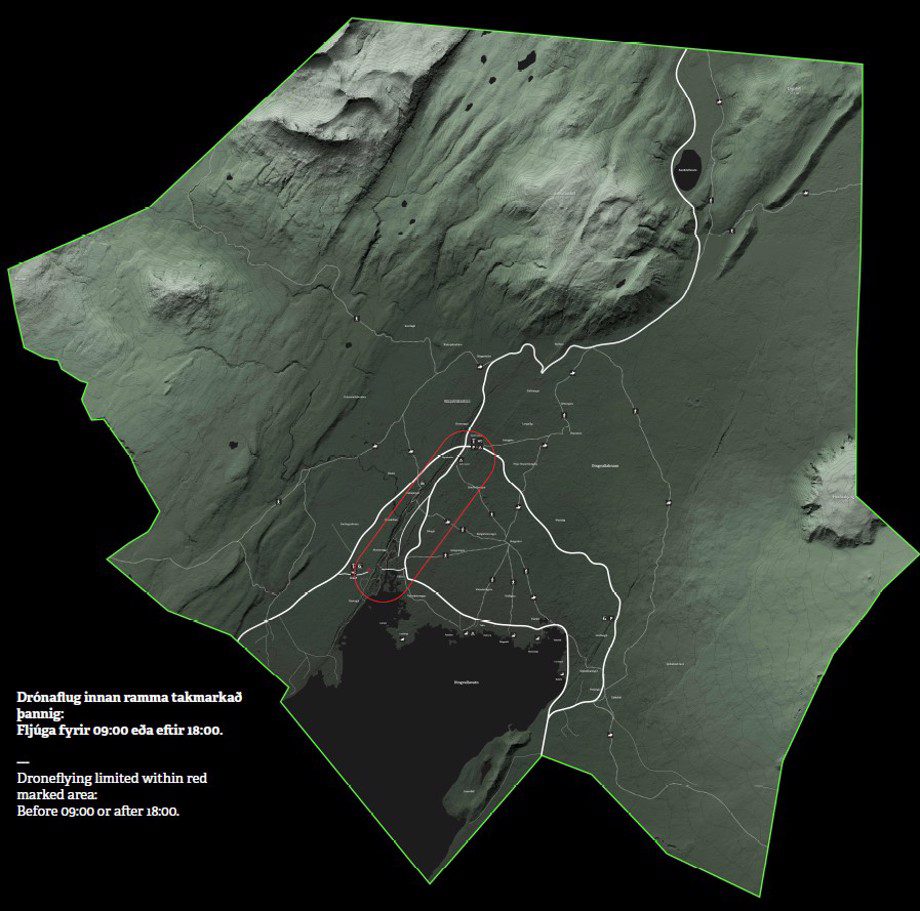
Click to enlarge!
This map, provided by Þingvellir National Park, illustrates where the local limitations are in effect (within the red circle).
Do I Need A Drone Permit In Snæfellsjökull National Park?
Snæfellsjökull National Park is located on the western side of the Snæfellsnes Peninsula. Since the start of 2025 it falls under the new Nature Conservation Agency of Iceland (Náttúruverndarstofnun), which took over nature conservation duties when the old Umhverfisstofnun was dissolved. As of 17 May 2026, the official rule treats the whole park as a single unit: between 1 May and 15 September Náttúruverndarstofnun will only issue drone permits for professional purposes (research, monitoring, supervision, construction, film and TV production, news reporting, professional photography and permit-required events). Recreational permits during that window are no longer issued. Outside that window, between 16 September and 30 April, you can apply for a permit through the island.is service portal.
Personal photography no longer qualifies. Applications go through the island.is service portal, and the process is neither cheap nor quick.

Click to enlarge!
Snæfellsjökull National Park is located on the western side of the Snæfellsnes Peninsula and encompasses a large part of the area.
Which Other Protected Areas Under Náttúruverndarstofnun (Nature Conservation Agency) Require Drone Permits?
Outside of the national parks, Iceland has dozens of protected areas (nature reserves, known seabird breeding grounds, geological monuments) that fall under Náttúruverndarstofnun. As of 17 May 2026 the agency has restructured how it processes drone permit applications inside those areas, and the headline takeaway for any visiting photographer is the same: recreational permits at the iconic protected sites are no longer being issued.
I’ve also written at length about why I think this particular change doesn’t hold up, based entirely on the agency’s own documents and research: Iceland’s Drone Ban Is Nature Conservation Theatre (also available in Icelandic).
Update (10 June 2026): After public debate, Náttúruverndarstofnun revised its guidance. The updated announcement now permits drone use for “commercial/professional” purposes and explicitly adds professional photography (atvinnuljósmyndun) to the permitted activities, alongside film, research and permit-required events. Checked again on 31 August 2026: the new wording now covers all three groups, Friðland að Fjallabaki included, and the English version of the page has caught up. The agency also said it would meet the Icelandic Professional Photographers Association about implementation. The upshot: professional photography is now named as a permitted purpose in every group the agency lists, so a professional application has a route where a recreational one does not. Whether a given job counts as professional is the agency’s call, so check its current page for your specific area before planning.

For the few workshop locations that still allow drones with a permit, I handle the application. For everything else, we plan around what’s allowed.
Every Náttúruverndarstofnun Site, And When It Closes
At the following sites, Náttúruverndarstofnun has stopped granting recreational drone permits altogether, year round. Permits here are reserved for research, monitoring, supervision, construction work, film and TV production (including advertising, news reporting and similar productions), professional photography, and events that have their own permit. Recreational and personal-photography use no longer qualifies as a permittable purpose.
At the next set of locations, the agency only issues permits during the wider summer season, from 1 May to 15 September, and even then only for the same narrow list of professional purposes above. Recreational flying inside the window isn’t on the table. Outside the window (from 16 September to 30 April) you can still apply via the island.is service portal, but the agency makes no commitment on what they will or won’t approve.
Fjallabak Nature Reserve (Friðland að Fjallabaki) sits in its own bracket. The closure window is shorter (15 June to 15 September), but the rules during it are the same as above: professional purposes only, no recreational permits. Worth knowing: Landmannalaugar, Landmannahellir and Hrafntinnusker all sit inside Friðland að Fjallabaki and follow the Fjallabak window, not separate rules of their own. If you’ve seen older sources claiming Landmannalaugar has its own year-round ban, that confusion comes from the reserve boundary not being obvious from a map. It’s all the same protected zone.
| Site | Recreational drone status | Closure window |
|---|---|---|
| SiteAkurey | StatusNo recreational permits issued | WhenAll year |
| SiteDrangar | StatusNo recreational permits issued | WhenAll year |
| SiteDyrhólaey | StatusNo recreational permits issued | WhenAll year |
| SiteGeysir | StatusNo recreational permits issued | WhenAll year |
| SiteGjáin í Þjórsárdal | StatusNo recreational permits issued | WhenAll year |
| SiteGoðafoss | StatusNo recreational permits issued | WhenAll year |
| SiteGullfoss | StatusNo recreational permits issued | WhenAll year |
| SiteHáifoss og Granni í Þjórsárdal | StatusNo recreational permits issued | WhenAll year |
| SiteHjálparfoss í Þjórsárdal | StatusNo recreational permits issued | WhenAll year |
| SiteLátrabjarg | StatusNo recreational permits issued | WhenAll year |
| SiteMývatn and Laxá protected area | StatusNo recreational permits issued | WhenAll year |
| SiteSkógafoss | StatusNo recreational permits issued | WhenAll year |
| SiteSkútustaðagígar | StatusNo recreational permits issued | WhenAll year |
| SiteStórurð | StatusNo recreational permits issued | WhenAll year |
| SiteThe coast at Stapi and Hellnar (Arnarstapi) | StatusNo recreational permits issued | WhenAll year |
| SiteBlikastaðarkró-Leiruvogur | StatusProfessional purposes only inside the window. Apply via island.is outside it | When1 May to 15 September |
| SiteDimmuborgir | StatusProfessional purposes only inside the window. Apply via island.is outside it | When1 May to 15 September |
| SiteDynjandi | StatusProfessional purposes only inside the window. Apply via island.is outside it | When1 May to 15 September |
| SiteFlatey | StatusProfessional purposes only inside the window. Apply via island.is outside it | When1 May to 15 September |
| SiteGrótta | StatusProfessional purposes only inside the window. Apply via island.is outside it | When1 May to 15 September |
| SiteHólmanes | StatusProfessional purposes only inside the window. Apply via island.is outside it | When1 May to 15 September |
| SiteHornstrandir Nature Reserve | StatusProfessional purposes only inside the window. Apply via island.is outside it | When1 May to 15 September |
| SiteIngólfshöfði | StatusProfessional purposes only inside the window. Apply via island.is outside it | When1 May to 15 September |
| SiteLundey | StatusProfessional purposes only inside the window. Apply via island.is outside it | When1 May to 15 September |
| SiteSnæfellsjökull National Park | StatusProfessional purposes only inside the window. Apply via island.is outside it | When1 May to 15 September |
| SiteÞjórsárver | StatusProfessional purposes only inside the window. Apply via island.is outside it | When1 May to 15 September |
| SiteFriðland að Fjallabaki, including Landmannalaugar, Landmannahellir and Hrafntinnusker | StatusProfessional purposes only inside the window. Apply via island.is outside it | When15 June to 15 September |
The full list, with the agency’s own wording, sits on the Náttúruverndarstofnun drone rules page. The old protected-areas map is still maintained at kortasja.ust.is for the time being, but expect that to migrate to nattura.is at some point.
None of this carries over to Greenland. Greenland sits outside the EU, so the EASA framework above does not apply there at all: the ceiling drops to 100 metres, the paperwork is Danish, and your A1/A3 certificate buys you nothing. If Iceland is one leg of a longer Arctic trip, I have written up the drone rules for Greenland separately.
Are There Any Other Temporary Drone Restrictions & Regulations I Should Be Aware Of?
Yes, and this is the area that catches the most foreign visitors off guard. On top of the permanent rules, Iceland regularly issues temporary drone bans in specific areas. These usually happen for one of three reasons: a prominent individual visiting the country, an active rescue or scientific operation, or volcanic activity. In each case the restriction can be imposed at very short notice, sometimes hours.
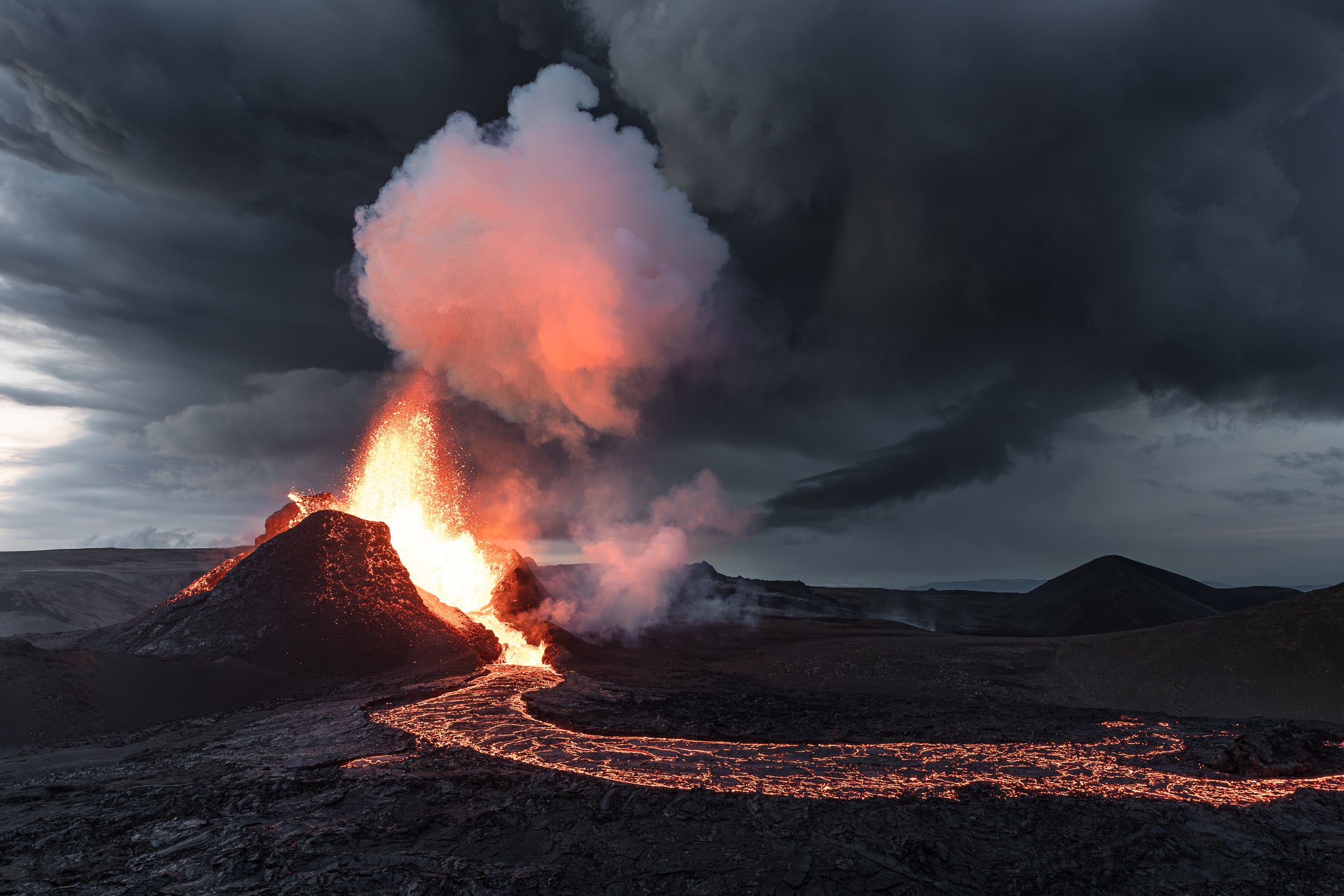
For example, during volcanic eruptions there may be temporary restrictions in place on drone flying when scientists are performing scientific surveys.
Some real examples from recent years:
- During the Grindavík disaster in November 2023 and its ongoing aftermath, drone flying was prohibited across the affected zone while emergency services worked, and bans were extended each time the eruption sequence at Sundhnúkagígar started a new phase.
- During the early hours of recent eruptions on the Reykjanes peninsula, drone flying was banned while the Icelandic Met Office (Veðurstofa) and university researchers conducted scientific surveys close to the eruption site.
- Temporary no-fly zones have been issued during high-profile diplomatic visits. These are short, localised, and not always communicated in English.
Where to actually check before you fly:
- The Icelandic Transport Authority (Samgöngustofa), the primary regulator. Their drone page publishes major restriction notices.
- Isavia, the national air navigation service. Their NOTAM (Notice to Airmen) feed is where temporary restrictions are formally published. If you’re planning a serious shoot, learn to read NOTAMs.
- The Icelandic Met Office (Veðurstofa). For eruption-related no-fly zones, this is the authoritative source.
- Civil Defence (Almannavarnir). For any disaster or rescue-related restriction.
A real life example: on numerous occasions during the eruptions at Sundhnúkagígar ,between 2023 and 2025, a no-fly zone was issued as soon as any of the eruptions began.
The practical takeaway: don’t trust a single source. Check Samgöngustofa for permanent rules, Isavia for active NOTAMs, and the Met Office if there’s any volcanic activity in the news. Cross-reference before every shoot in a sensitive area.
While it’s difficult to stay updated on those specific drone bans, they are generally communicated via the Transport Authority of Iceland or on the Isavia website.
What Changed In 2026 With Iceland’s Drone Rules?
If you’ve seen posts this spring claiming Iceland has banned drones, that is not what happened. Drones are still legal across most of the country. What actually changed is narrower and more specific than the headlines suggest, and it is worth understanding properly.
A Structural Change
The first change is structural. On 1 January 2025, the old Environment Agency of Iceland (Umhverfisstofnun) was dissolved. Its work was split between two new agencies: Umhverfis- og orkustofnun, which handles environment and energy, and Náttúruverndarstofnun, the Nature Conservation Agency, which inherited everything to do with protected areas. Náttúruverndarstofnun is now the authority for protected areas, and since 2025 Vatnajökull and Snæfellsjökull national parks sit under it as well. Vatnajökull still publishes and enforces its own drone rules, so for that park you follow the park page. Þingvellir remains a separate administration with its own board. The website is nattura.is and the email is info@nattura.is. The English version of their site is still partly under construction, so don’t be surprised if you land on Icelandic-only pages.

Regulations in some of the most popular drone locations in Iceland have been tightened and permit applications are not possible anymore in some of them.
Tightened Rules For Permit Applications
The second change is the one that actually tightens the rules. On 17 May 2026, Náttúruverndarstofnun announced a change in administrative practice for processing drone permit applications within protected areas. In plain language, the agency now only issues permits for a specific, narrow list of purposes: research, monitoring, supervision, construction work, film and TV production (including advertising, television programmes and news reporting), professional photography, and permit-required events. Recreational photography and hobby flying are no longer on that list, even with an application.
The affected locations split into three groups (see the full list in the protected-areas section above). The headline implication is the one you’ll feel as a visiting photographer: at iconic protected sites such as Gullfoss, Skógafoss, Goðafoss, Geysir, Dyrhólaey, Látrabjarg, Háifoss, the Stapi and Hellnar coast and the Mývatn protected area, applying for a recreational drone permit is no longer a route that exists. Outside these protected zones, the EU/EASA framework still applies as normal, and there are plenty of magnificent locations across Iceland where you can fly legally and responsibly. The Náttúruverndarstofnun change doesn’t make a drone trip to Iceland pointless. It does mean you need to plan your shoot list around where you’re allowed to be, not where you’d like to be.
My advice for any independent trip is to treat the Náttúruverndarstofnun list as the binding one, plan your shoot list around it, and assume that the iconic protected sites in the first group are off-limits to your drone full stop. For the few workshop locations that still allow drones with a permit, I handle the application; otherwise we plan around what’s allowed.
Is There A Map That Shows All The Areas In Iceland With Specific Drone Regulations?
Yes, but as with everything in Icelandic drone regulation, the answer is more complicated than that.
The Icelandic Transport Authority has produced a map that tries to combine all the areas where specific drone regulations apply. It’s a step in the right direction, and it’s the closest thing Iceland has to a single source of truth. But the map is incomplete, and some of the information on it is simply wrong. I’ve personally confirmed at least two cases where the map flags areas as having permanent drone bans when no such ban exists. Fjallabak and Þjórsárver are both marked with permanent bans on the current map, but neither is actually a year-round blanket ban. The actual rules are seasonal: Fjallabak closed 15 June to 15 September, Þjórsárver closed 1 May to 15 September. Outside those windows, applications can be made via island.is, although since 17 May 2026 they are only granted for professional purposes.
Where the Iceland drone maps are, and what each one covers:
- The English overview page: island.is/en/drone-map. This is where the Transport Authority summarises the restrictions and links out to the map itself.
- Drónakort, the map that actually renders the zones: kort.gis.is/mapview/?app=dronar. Icelandic interface, and the one to open in the field.
- Protected areas are not on the drone map at all. The year-round and seasonal lists that decide most photography locations live on the Náttúruverndarstofnun site, nattura.is, and that page is the binding one.
- Each national park publishes its own map. Vatnajökull, Þingvellir and Snæfellsjökull maintain separate restriction maps, and Vatnajökull’s is the only place the time-of-day windows are drawn.
- No single map is complete, so do not fly off one. Airport zones, temporary NOTAMs and time-of-day windows are all missing from Drónakort, and two areas are marked wrong on it as of writing.
Four things the map will not tell you:
- Airport restricted zones live somewhere else entirely. They are published on the Transport Authority website and in the Icelandic Aeronautical Information Publication, the AIP, not on the drone map. If you only check the map you will miss them.
- Temporary restrictions never appear on it. A NOTAM through Isavia, a Met Office advisory or a civil defence directive will not show up. During an eruption that is the restriction that matters most.
- Time-of-day windows are not zones. Þingvellir closing 09:00 to 18:00, and the Skaftafellsjökull, Jökulsárlón and Dettifoss brackets, are rules you have to look up rather than shapes you can see.
- Two areas are marked wrong, as of writing. Fjallabak and Þjórsárver both show permanent bans. Neither is one. Fjallabak closes 15 June to 15 September, Þjórsárver 1 May to 15 September.
How I use it: the map is my first check and never my only one. Anything it flags, I confirm against the managing authority’s own page, because that page is the one that is current.

The rules sit with several different authorities, which is why no single map carries all of them.
So how do I actually verify what applies to a given location before a shoot? I cross-check four sources:
- The Transport Authority’s official map as a starting point, knowing it has errors.
- The Nature Conservation Agency website (Náttúruverndarstofnun). For any protected nature reserve, this is more authoritative than the central map.
- The specific national park website. Vatnajökull, Þingvellir, and Snæfellsjökull each maintain their own detailed rules and seasonal restriction maps.
- Local pilot communities. There’s a substantial Iceland drone community on Facebook. For ambiguous areas, the people who actually live and fly here are often the fastest source of accurate information.
Example: I regularly get messages from people stating I was flying in an area with a total drone ban, despite me having the permits to fly there. While I don’t need to justify myself to everyone but the local authorities, it would be great if there was more clarity on this. A well-maintained, accurate national map is genuinely needed, and I hope the Transport Authority gets there eventually. Until then, treat any single map as a starting point, not a verdict.
How Can I Request A Drone Permit In Iceland?
For most foreign visitors, the honest answer is that you probably won’t need to apply. The 17 May 2026 Náttúruverndarstofnun change closed the recreational permit route at the iconic protected sites, Vatnajökull dropped its recreational permit requirement back in July 2024, and Þingvellir doesn’t issue recreational permits at all. The cases where an application still matters today are:
- Commercial or professional work (filmmaking, advertising, research, news production, surveying, construction) inside a protected area or a national park. Náttúruverndarstofnun and the three national parks all still process these.
- Recreational flying outside the closure window in one of the seasonal Náttúruverndarstofnun areas (Hornstrandir, Þjórsárver, Dynjandi, Flatey, Grótta and similar, closed 1 May to 15 September). Outside that window the agency will accept applications via island.is, although it makes no commitment on whether recreational use will be approved.
- Snæfellsjökull National Park outside 1 May to 15 September. Apply via island.is to Náttúruverndarstofnun.
Iceland has no single national drone permit office. Different authorities manage different areas:
- Náttúruverndarstofnun, the Nature Conservation Agency: Hornstrandir, Þjórsárver, Snæfellsjökull, Friðland að Fjallabaki and all other protected areas outside the national parks. Applications go through the island.is service portal. The form is in Icelandic with limited English support. The agency’s published processing time is 15 days. Do not count on it: my own 2026 application took 196 days from submission to decision, so apply as early as you can.
- Vatnajökull National Park: recreational use no longer needs a permit, but Categories I to V (above) must be followed. Commercial permits are filed through the park’s drone information page.
- Þingvellir National Park: coordinated through the park office. Recreational flying is restricted in the central core between 09:00 and 18:00 regardless of permits; outside that core no permit is needed.
What to include in any application:
- Your full name, contact details, and operator/pilot license numbers.
- Exact GPS coordinates of intended takeoff and landing points.
- Planned flight altitude and route.
- Specific dates and time windows.
- Drone make, model, weight, and serial number.
- Purpose of the flight (research, film, advertising, news, construction or other professional reason).
- Proof of third-party liability insurance. Cover is legally mandatory above 20 kg and in subcategory A2 and above, and permit-issuing authorities normally ask for it regardless. Strongly recommended for recreational flying too, since most travel policies exclude drones.
Frequently Asked Questions
To keep everything concise and clear, I have also combined the most burning questions into a list with short answers.
What Are The Drone Rules In Iceland?
Iceland follows the EU/EASA Open Category rules. You must register as an operator (ISK 5.863, valid five years), pass the free A1/A3 online exam, fly within visual line of sight, stay under 120 metres above ground, and keep 30 metres from uninvolved people in subcategory A2. Iceland then adds its own layer of seasonal closures and permit bans across national parks and protected nature sites, so always check the official map before you fly.
How Do I Register My Drone In Iceland On Flydrone.is?
You register through Flydrone.is, the Icelandic Transport Authority’s official portal. Create an account, register as an operator, and pay the ISK 5.863 fee (about €38), which covers you for five years. If your drone weighs 250 grams or more, you also take the free A1/A3 online exam, and you must mark the drone with your operator registration number before you fly. If you already hold an operator registration from any EU or EEA country, it is recognised in Iceland and you do not need to register again.
Are Drones Banned In Iceland From 15 April To 15 September?
There is no single nationwide ban, but most of Iceland’s protected nature reserves close to drones during the bird-nesting season, with the majority shut from 1 May to 15 September. Látrabjarg goes further and sits on the year-round list, where recreational permits are not issued at all. Outside those protected areas the normal EU/EASA rules apply year-round, so you can still fly legally in many parts of the country. Always check the official drone map for the exact dates at the specific spot you have in mind.
What Changed In 2026 With Iceland’s Drone Rules?
Two changes landed on top of each other and the press coverage rolled them into one. First, the old Environment Agency of Iceland (Umhverfisstofnun) was dissolved at the start of 2025 and split into two new agencies, with Náttúruverndarstofnun inheriting authority over protected areas. Second, on 17 May 2026, Náttúruverndarstofnun tightened how it processes drone permit applications inside those protected areas. Recreational and personal-photography permits are no longer issued for around fifteen specific sites (Gullfoss, Skógafoss, Goðafoss, Geysir, Dyrhólaey, Látrabjarg, the Mývatn protected area, Háifoss and others). Permits at those sites are still issued, but only for research, film and TV production, news reporting, construction work, professional photography or permit-required events. The wider EU/EASA rules everywhere else in Iceland are untouched, and there are still many beautiful locations across the country where flying is allowed. The full list of affected sites sits in the protected-areas section above.
Do I Need Drone Insurance To Fly In Iceland?
Third-party liability insurance is only legally required above 20 kg, or in subcategory A2 and above, so for a typical camera drone in A1 you are not obliged to carry it. Most foreign drone pilots don’t carry this and most travel insurance policies don’t cover drone operations by default. Before flying in Iceland, check with your insurer whether your existing policy covers drone use abroad. Specialist drone insurance is widely available and starts at a few euros per day for short trips.
What Happens If I’m Caught Flying Illegally In Iceland?
The regulation says it plainly. Article 5 of Regulation 1360/2024 states that breaches are punishable by fines or imprisonment of up to five years, under Article 253 of the Aviation Act No. 80/2022. That five year figure is the statutory ceiling for aviation offences, not what a visitor gets for launching at Skógafoss, and I have never heard of anyone going to prison over a drone here. What actually happens, in my experience: rangers in national parks and protected reserves do approach drone pilots and will ask what you are doing and whether you have authorisation, and most encounters end with being asked to land. The practical cost is nearly always the ruined shoot rather than the penalty. Flying over an active emergency or inside a restricted eruption zone is a different matter, and that is where those provisions have real teeth.
Do I Need A Different Drone Registration If I’m Already Registered In Another EU Country?
No. Your existing EU/EEA registration is valid in Iceland. If you’re registered in Belgium, Germany, France or any other EU/EEA country, your operator ID and pilot license carry across without re-registration.
Can I Fly My DJI Drone In Iceland If I Bought It In The US Before The DJI Ban?
Yes. The DJI situation is a US-specific market and import issue, not a flying ban. Two separate US mechanisms are in play: customs detentions of new shipments under the Uyghur Forced Labor Prevention Act, and DJI’s addition to the FCC Covered List in December 2025, which blocks new US equipment authorisations. Neither affects Europe, so a DJI drone you already own is completely legal to bring to Iceland and fly here, subject to the standard Icelandic and EASA rules.
Is It Legal To Fly A Drone Over Volcanic Eruption Sites In Iceland?
Sometimes. Iceland’s authorities frequently impose temporary no-fly zones during active eruptions, particularly while scientists are conducting close-range surveys. Outside those temporary restrictions, drone flying over older or less active eruption sites is often permitted, but rules change rapidly. Always check the Icelandic Met Office (Veðurstofa) and current NOTAMs before flying near any volcanic activity.
Are There Any Areas Of Iceland Where I Should Voluntarily Avoid Flying Even If It’s Legal?
Yes, and this is one of the most important points in the whole guide. Many of Iceland’s most photographed locations (Stokksnes, Vestrahorn, Kirkjufell, the south coast beaches) attract thousands of visitors daily in summer. Even where drone flying is technically permitted, repeatedly flying over crowds, near hikers, or above sensitive wildlife creates real problems for both other visitors and the broader drone community. Use judgment.
Where Can I Get Help If I’m Unsure About The Rules For A Specific Location?
For any specific question, contact the Icelandic Transport Authority directly via the contact form on their drone page. For protected areas, the Nature Conservation Agency responds to operator queries by email within a few working days. Local drone communities on Facebook are usually faster for time-sensitive questions about a specific area.
Where Can I Find The Iceland Drone Map?
There’s one official drone map. island.is/en/drone-map is not it: that page is the Icelandic Transport Authority’s English summary, and it links out to the map rather than showing it. The map itself is Drónakort, at kort.gis.is/mapview/?app=dronar. Icelandic interface, and that’s the one to open in the field. To be clear: Drónakort covers airspace restrictions, not protected areas, and protected areas are what decide most photography locations. Those closures live as lists on nattura.is, the Náttúruverndarstofnun site, and that page is the binding one. I’ve checked Drónakort against those lists myself and found it flagging Fjallabak and Þjórsárver as permanent bans when both are seasonal, so check the lists as well as the map before you fly.
Can I Fly A Drone At Landmannalaugar?
Not recreationally between 15 June and 15 September. Landmannalaugar sits inside Friðland að Fjallabaki, so it follows the Fjallabak window rather than any rule of its own, and Landmannahellir and Hrafntinnusker are in the same reserve. During the closure Náttúruverndarstofnun only issues permits for professional purposes, meaning research, monitoring, supervision, construction, film and TV production and professional photography. Outside the window you can apply through the island.is service portal, although the agency makes no commitment on whether recreational use will be approved. If you’ve seen older sources claiming Landmannalaugar has its own year-round ban, that comes from a reserve boundary that isn’t obvious on a map. It’s all the same protected zone.
How Old Do You Have To Be To Fly A Drone In Iceland?
Sixteen, with two ways round it for younger pilots. An under-16 may fly a sub-250 gram C0 drone in subcategory A1, or fly under the supervision of a registered pilot who holds the A1/A3 certificate. Either way a legal guardian has to be the registered operator for a child’s drone, so the registration and the operator number on the airframe stay the adult’s responsibility.
Drone Buyer’s Guide: Which Drone Should You Get?
If you are still looking into buying a drone, make sure to check out my up-to-date drone buyer’s guide which details which drone you should consider as a photographer.
DISCOUNT
The Drone Photography Masterclass – Video Course
Nigel Danson & Jeroen Van Nieuwenhove‘s complete drone photography video masterclass will explore everything you need to know to start creating the best aerial photographs using any type of drone in more than 55 videos. Whether you are a complete beginner or an advanced drone pilot, this video course contains a vast amount of information to level up your drone photography skills.
What Drone Photography Masterclass Participants Said…
Learn Drone Photography With My E-Book
Want to learn how to get the best results with your newly purchased drone? I wrote the most comprehensive guide available on drone photography which teaches you a technique to get the DSLR-like results out of even the cheapest drones.
In 125 detailed pages I explore everything you need to know to start creating the best photographs using any type of drone. Whether you are a complete beginner or an advanced drone pilot, this e-book contains a vast amount of information to level up your drone photography skills.
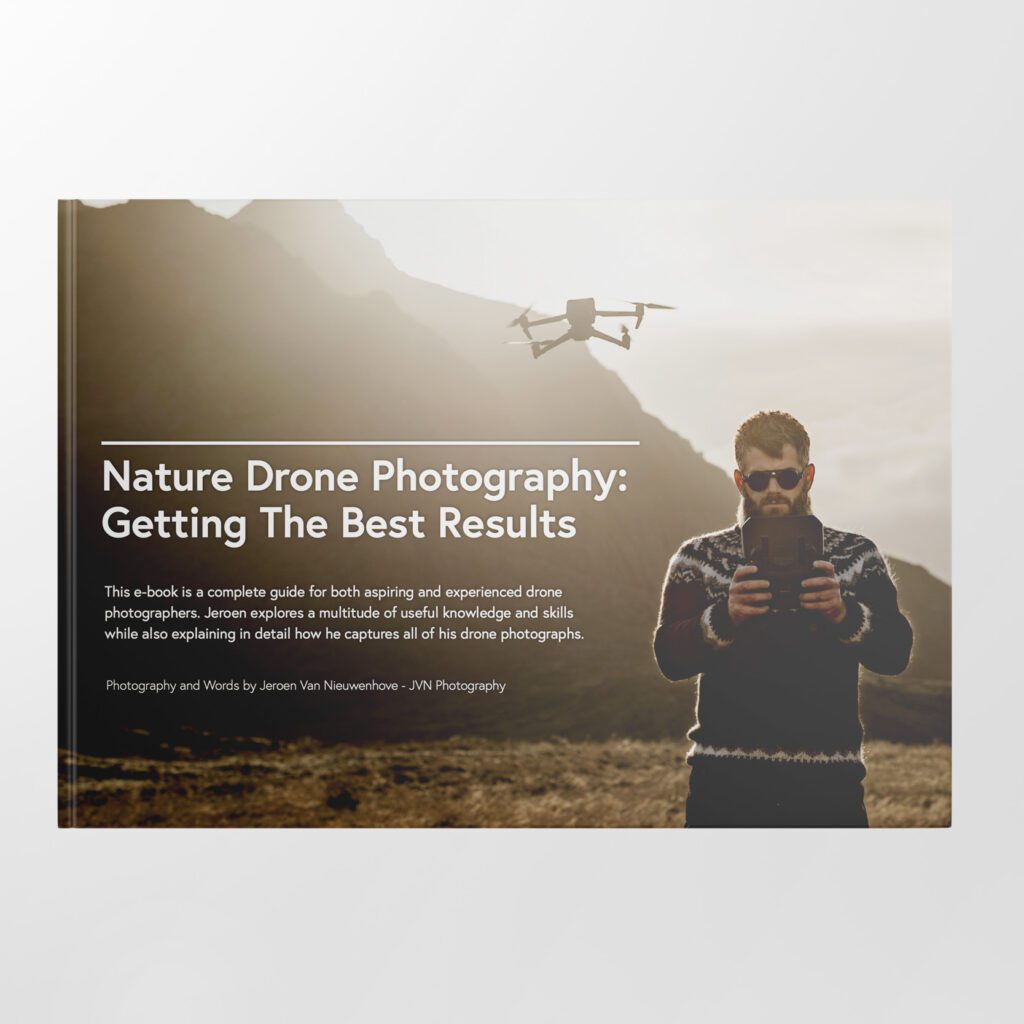
What to Expect?
- A 125-page educational PDF about nature drone photography with very detailed explanations
- Which drone to get for photography and why
- Important settings and configuration options
- A list of useful skills & tips
- A list of useful accessories and what not to buy at all
- How to research locations for drone photography
- How to compose with a drone and insight into Jeroen’s thought process with plenty of examples
- Thoughtfully planning ahead for your drone shoot
- The how and why of creating bracketed images
- The how and why of shooting HDR panoramas
- What challenges you might face and how to deal with them
- Common mistakes & how to deal with them
- How to stitch your panoramas together
Use EBOOK20 to get 20% off your Nature Drone Photography (E-Book) purchase!


Discover Jeroen’s Photo Workshops in Iceland, Greenland & Beyond
Ready to take your photography to the next level? Join me, Jeroen Van Nieuwenhove, on unforgettable photo workshops in Iceland, Greenland, Antarctica and other exciting destinations. Whether your passion is wildlife photography, bird photography, landscape adventures, or mastering drone photography, each workshop is designed to give you hands-on guidance in some of the world’s most spectacular locations.
From puffins in the midnight sun to Arctic foxes in the wild, from glaciers and volcanoes to dramatic coastlines seen by drone – these journeys are more than workshops; they’re once-in-a-lifetime experiences. Group sizes are kept small, ensuring personal mentoring and plenty of shooting opportunities.
Looking for something specific? Check out Jeroen’s…
- Wildlife & Bird Photography Workshops (Puffins, Arctic Foxes)
- Drone Photography Workshops
- Photo Workshops in Iceland
- Photo Workshops in Greenland
- Photo Workshops in Antarctica
Spots are limited – secure your place today!
Are You Looking For A Specific Photo Workshop?
All Upcoming Photography Workshops With Jeroen
Explore all upcoming photography workshops with Jeroen and take your skills to the next level in some of the world’s most extraordinary locations. From the volcanic landscapes of Iceland to the ice-filled fjords of Greenland and the wildlife-rich polar regions such as Antarctica, each workshop is designed to help you grow creatively while experiencing unforgettable moments in the field. Browse all upcoming departures below and find your next adventure!
LAST SPOTS
LAST SPOT
LAST SPOTS
OPEN FOR BOOKINGS
LAST SPOTS
WAITLIST
WAITLIST
WAITLIST
WAITLIST
WAITLIST
WAITLIST
WAITLIST
WAITLIST
What Previous Photo Workshop Participants Said…
Choosing the right photography workshop is about more than just visiting iconic locations. It’s about experience, safety, timing, and personal guidance. Below you’ll find honest reviews from photographers who have joined me on landscape, wildlife & drone photo workshops in Iceland, Greenland and other locations. These testimonials reflect real experiences in small groups, hands-on instruction in challenging conditions, and the level of care Jeroen aims to bring to every workshop.
These reviews are verifiable on Jeroen’s public Google Business profile.


Support Jeroen’s Work
As an independent photographer, Jeroen partially relies on your support to keep producing worthwhile content such as blogs, photographs, books and much more. If you want to support his work, it is possible to do so by buying his e-books & books.
You can also sign up to the newsletter to stay up to date on new blog posts, projects, workshops and other interesting information.
Thank you for considering!




Hi Jeroen,
Nice through article. Thanks for sharing it!
In the section above “Which Drone License Do I Need?” you write, “Such drones are labeled with a C1, C2 or C3 label.” Is this labeling printed somewhere on the drone by the manufacture or is it added to the drone in the form of a registration label?
I have a Mavic 3 Pro bought in the U.S. and I do not see any classification label printed on it by DJI such as C1, C2 or C3.
I have a a UAS registration number from the IAA (Irish Aviation Authority which is part of the EU) that number allows me to fly in A1 or A3 subcategories but that number does not have the C1, C2 or C3 nomenclature in it. What I’m I missing?
Thanks,
mark
Hi Mark, thanks for reaching out! It seems that only drones sold in Europe have these labels. I know that the Mavic 3 Pro shipped in Europe with a C2 label as it’s over 900 grams. I did a bit of research on this and there’s no mention on these labels being required on drones sold outside of the US. As long as you’re licensed in the EU and fly in the correct category, I wouldn’t be too concerned about it.
Thanks for the further info. I completed the A1/A3 test in October in preparation, so I’m all set.
If I am a photographer who wants to use drones on frequent basis in Iceland (for ex in Highlands ect) How to apply for this kind of long term permit?
Hi Julia, thanks for reaching out. In the highlands there are a few areas where you need additional permits such as Fjallabak Nature Reserve, Vatnajökull National Park and Þjórsárdalur. Such permits can be obtained from the Environment Agency of Iceland as detailed in the article. I am not aware of them granting long-term permits. It’s likely you will have to apply each time you go.
I have one other question (from reading your e-book): The DJI Mini 3 Pro is, as you say, a C0 drone. But is it still considered a C0 in the EU if using the heavier battery, which does take it over the 250g limit, I think?
If the battery takes it over 250 grams, it is no longer a C0 drone. I even think the C0 label is printed on the batteries themselves so the drone can’t be labeled as C0 with the larger Plus batteries. When it’s over 250 grams, you can fly it within the A1/A3 Open category though.
Thank you for gathering all of this information into one place — very useful.
One question: In the US, drones are now required to have Remote ID (broadcast informational data). Is this now also an EU requirement?
I’ve purchased and downloaded your e-book and am enjoying it — thanks for this as well.
Hi Josh, thanks for your kind words. Glad to read you find the article useful. In the EU, remote identification is required since January 1st 2024. However, in Iceland these rules are not yet into effect. They will be from March 1st onwards.
Thanks for this article. It answers a lot of questions, since I”m planning a visit to Iceland with my drone. It’s basically a case-by-case depending on your location, season and time of day.
Is it also true that many places are privately owned land in Iceland, and one should try to get permission to fly if you can determine who to ask?
And, your drone e-book is excellent?
Hi Andy, glad to read that the article helped you out and that you are enjoying my drone e-book! To answer your question… Private land owners can prevent you from taking off from their land if they desire. However, the airspace is maintained by the Icelandic Transport Authority, which means that you can take off from public land and still fly over privately owned land. Of course, the real question is: do you want to be that person?
Great article! Very useful as typically the details are difficult to find out.
Thanks Jon! Glad to read you find it useful!