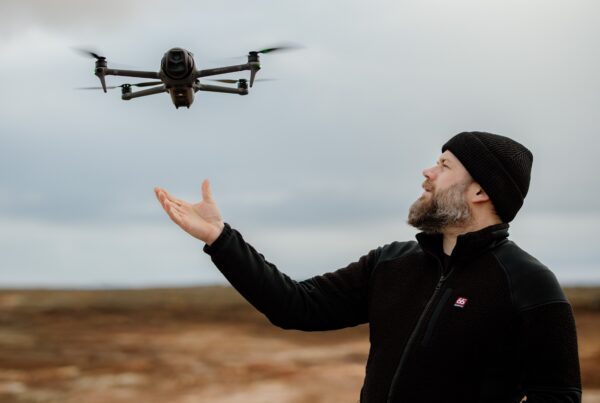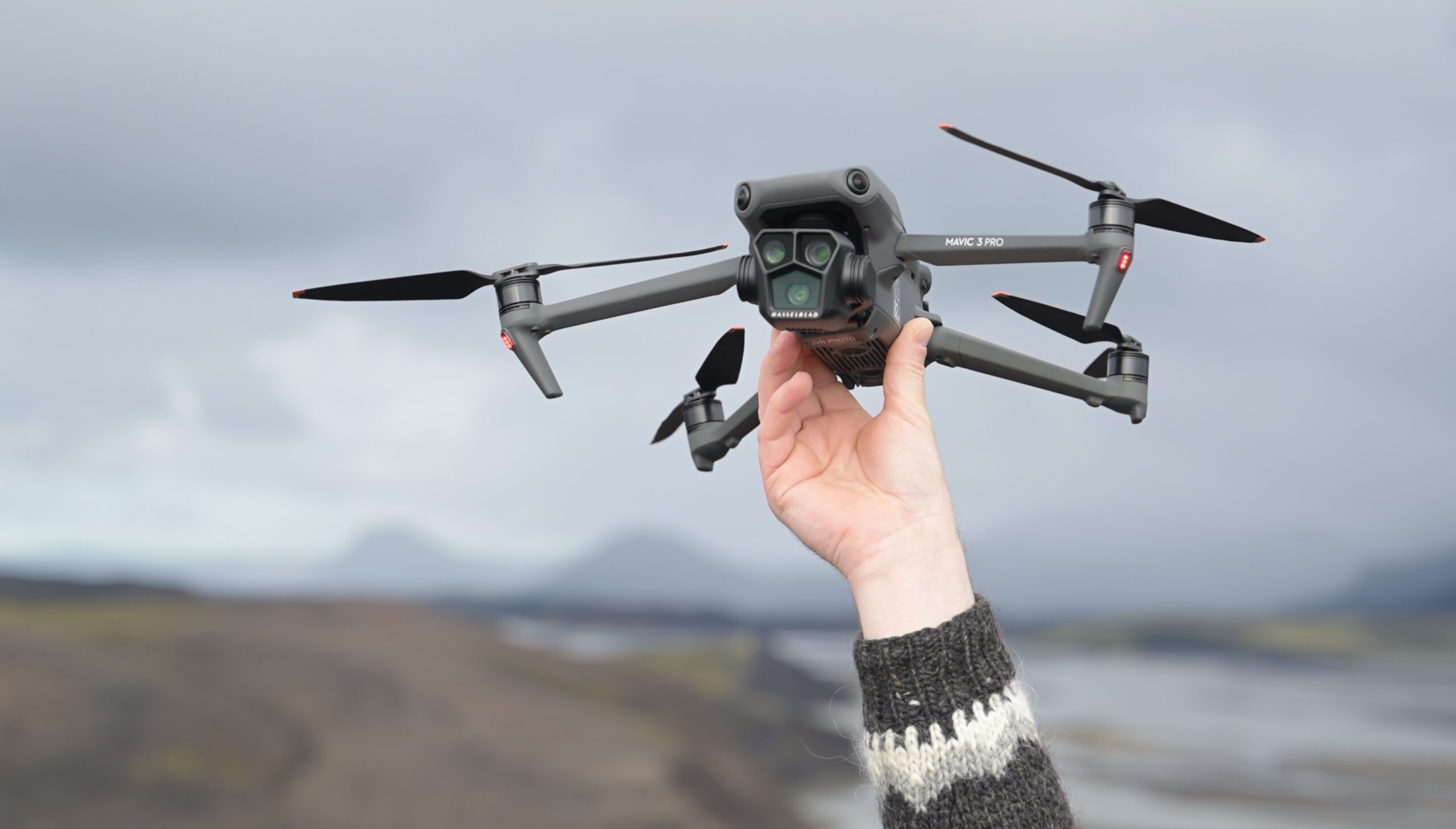
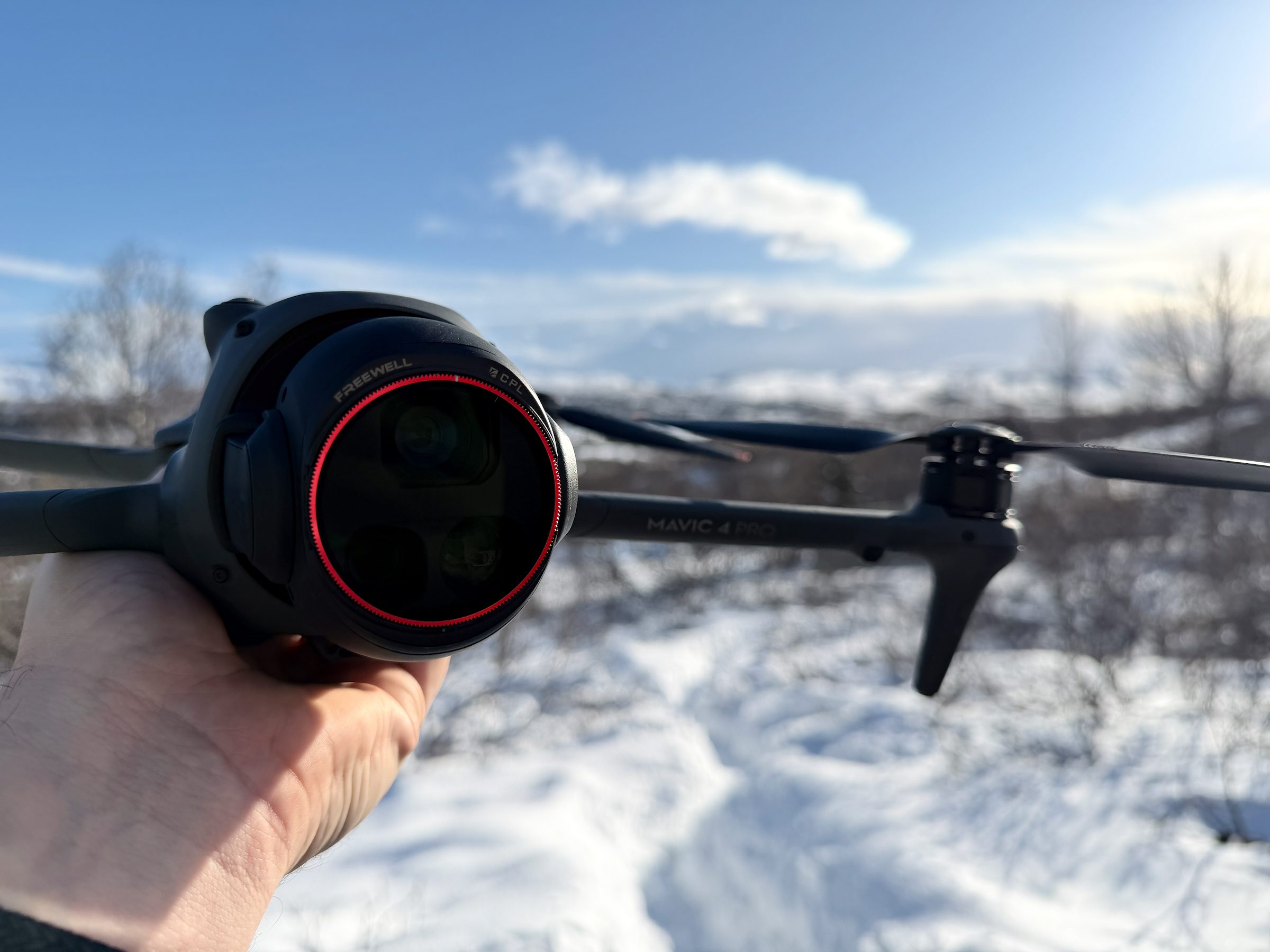
When the DJI Mavic 4 Pro was first announced, one feature immediately stood out as a massive step forward to me: true vertical shooting. Finally it was possible to shoot true vertical single shot images on a prosumer drone, without software trickery. Mavic 4 Pro‘s 360 degree gimbal is able to physically rotate the camera, allowing you to switch effortlessly between horizontal and vertical orientation while keeping full resolution. For anyone shooting for social media or vertical prints, that’s a big deal. Being able to move between orientations mid-flight is liberating and solves a long-standing compromise in drone photography.
Around the same time as the release, I was sent a set of ND-PL and CPL filters by Freewell to test with the Mavic 4 Pro. Given how many drone photo workshops I had planned last summer, I expected to test these filters thoroughly. However, I quickly ran into a very big, perhaps expected, limitation with them: polarisation and rotating gimbals don’t work well together. As a result, I stopped using them and decided this was not a product I could recommend combined with a Mavic 4 Pro. Recently, after a conversation with Freewell, I decided to write down my thoughts and issues to share with others. Why didn’t it fit my workflow? Let’s dive in!

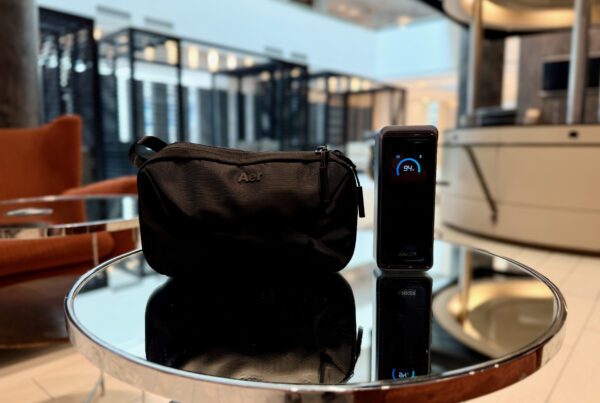
The filters themselves replace the cover plate on the camera module, which you can easily remove by twisting it. My only gripe is that I wish the box that contains the filters would be taller so it could hold the original Mavic 4 Pro face plate.

Freewell sent me this neatly packaged set of ND-PL filters for use with the DJI Mavic 4 Pro and a separate CPL filter.
Polarisation Works… Until You Rotate The Drone’s Camera
ND-PL and CPL filters behave very differently from regular ND filters. Their effect depends entirely on how they are oriented. What’s important is the angle between the camera, the sun, and reflective surfaces like water, snow, ice, or wet terrain. When using a polariser on a handheld camera, this is easy to control. You can easily rotate the filter until reflections drop away or the sky darkens evenly. You fine-tune it for that exact composition & framing. When you are using a drone, it’s not quite that easy. Once a polarising filter is mounted and you take off, the control you have over the filter’s position is gone. You essentially choose an orientation before takeoff and hope it works well enough in the air. If you know what you want to shoot beforehand, you can plan for it and I have done. In the past, I have used ND filters and especially polarisers on my drones.
However, with the Mavic 4 Pro, which is now my main drone, that lack of control becomes much more obvious. Before the release of Mavic 4 Pro,, I had never used a drone with a rotating gimbal that allowed me to switch between orientations. Using it, exposed a serious limitation for me. As soon as you rotate the gimbal into vertical mode, the polariser’s effective angle changes by ninety degrees relative to the scene. This means that while your CPL or ND-PL looked great in horizontal orientation, it will suddenly be completely misaligned in vertical mode. This means that reflections reappear, contrast vanishes and more. This completely defeats having that gimbal rotation.
At that point, you will have to abandon your composition, fly back to your takeoff location, rotate the polariser to fit the scene you were shooting and then fly back. Precious time and battery life is lost at that point but also, in several instances, that meant the light & weather conditions I was trying to photograph had completely changed.
Yes, I am aware this is completely normal. However, with my main workhorse now having functionality that allows me to easily switch between vertical and horizontal orientation, it makes that limitation so much more apparent that it turns a potentially useful tool into a limitation that I can not accept in my workflow. This limitation is true for any drone that can easily switch between orientations such as the DJI Mini 4 Pro and DJI Mini 5 Pro.
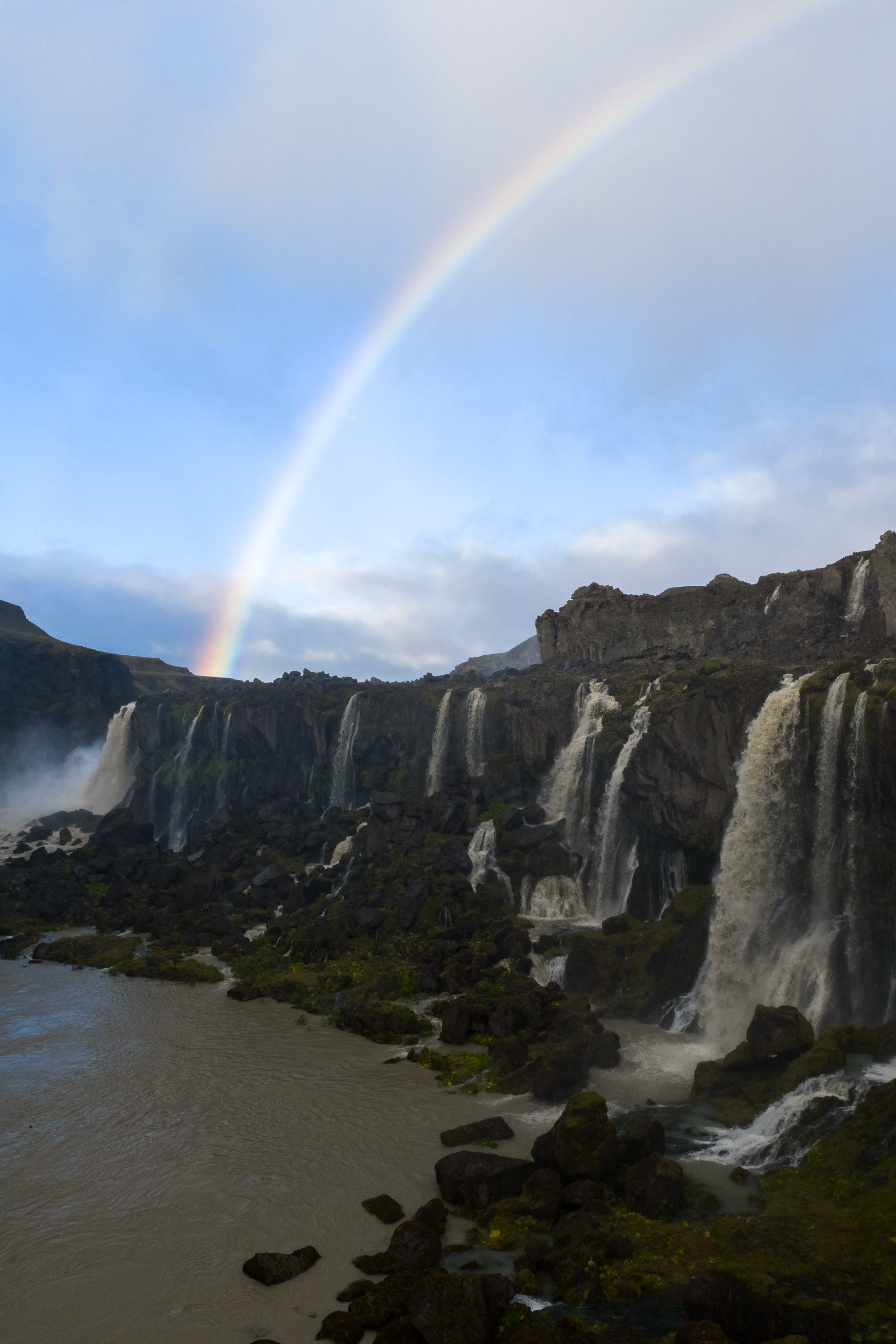
An unedited vertically oriented image which shows how well the CPL can work to highlight rainbows by increasing contrast in the sky & bringing out the colors but…
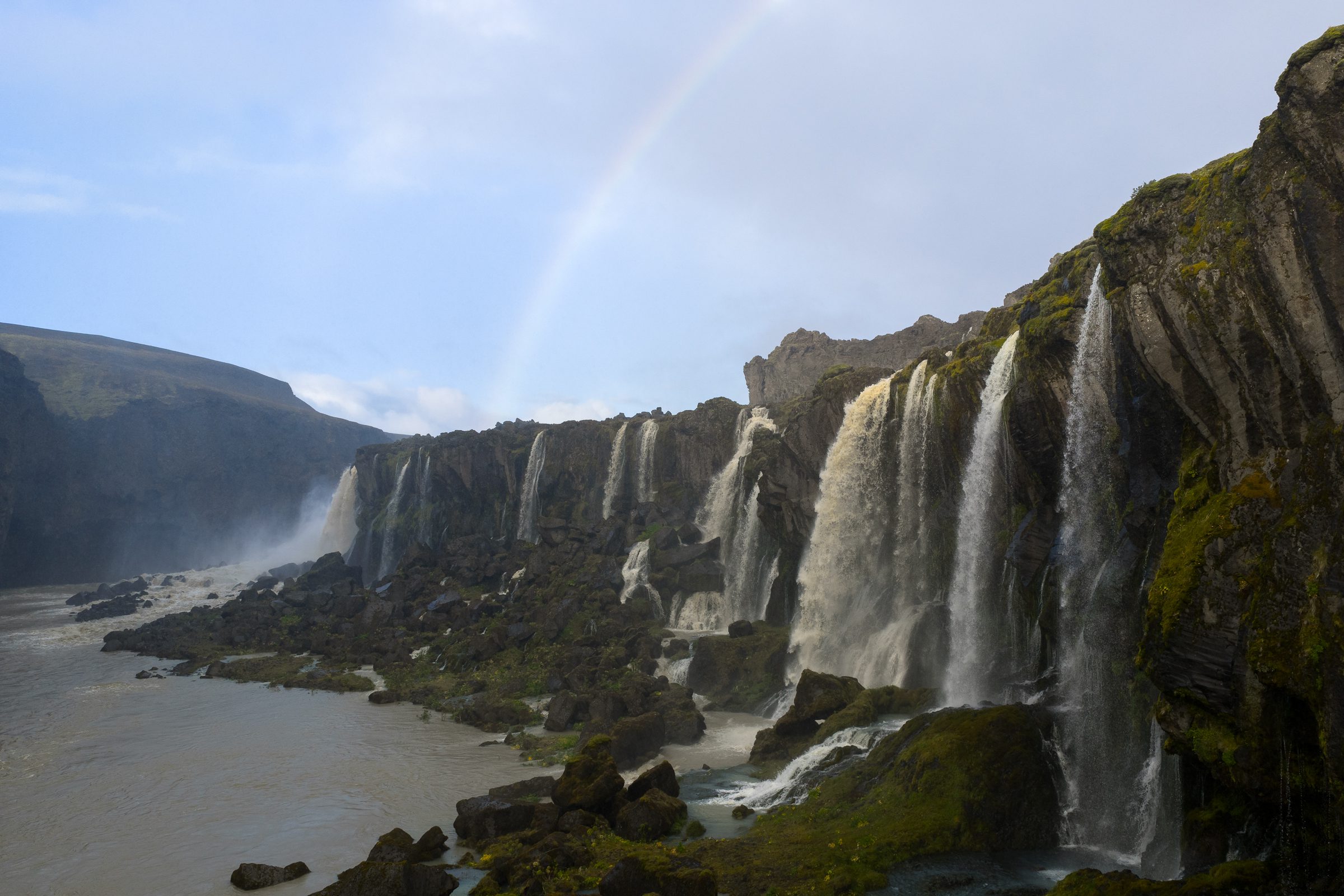
…then I flipped the camera unit horizontally. This image, which is unedited, beautifully demonstrates what my problem is with circular polarisers on drone’s with rotating gimbals.
Why This Is Not (As Much Of) An Issue On Drones With Gimbals That Can’t Rotate
This problem doesn’t really exist on drones with gimbals that can’t rotate, such as the Mavic 3 Pro & Air 3s, simply because the camera orientation never changes once you’re in the air. On those drones, you are committed to shooting horizontally before takeoff so you set the polariser accordingly and work within that limitation for the entire flight. While you still lose the ability to fine-tune the filter mid-air, the relationship between the camera, the sun, and reflective surfaces stays fairly consistent, which makes polarisation predictable and manageable. As long as you’ve planned your shot and light direction beforehand, CPL and ND-PL filters can work reliably in that fixed orientation. It’s only when the camera itself starts rotating mid-flight that this predictability breaks down, exposing a limitation that simply isn’t triggered on non-rotating gimbals.
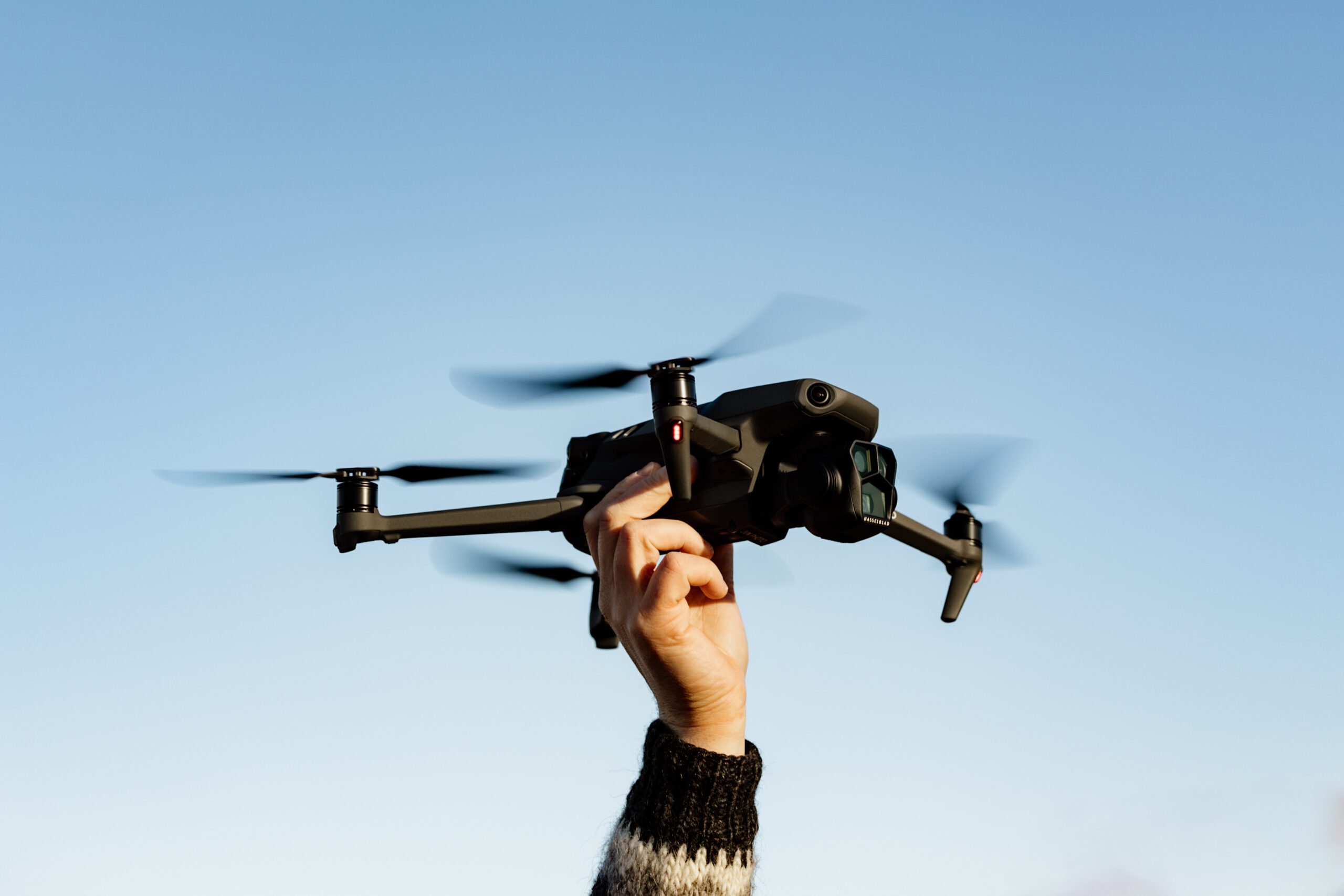
While I didn’t often use a CPL on my DJI Mavic 3 Pro, it never dawned on me how paralysing a polariser could be when one of my biggest asks was added to Mavic 4 Pro: true vertical shooting.
This Is A Practical Takeaway, Not A Criticism Of Freewell’s Product
To be entirely clear: this isn’t a criticism specific to Freewell’s filters, and it’s certainly not a flaw in the Mavic 4 Pro. Both are doing exactly what they were designed to do. However, the expansion of Mavic 4 Pro‘s gimbal functionality more obviously exposes a limitation that has always existed: polarising filters assume you have control over the rotation of the filter but that control only exists when the drone is on the ground. Having access to true vertical shooting accentuates that limitation because now you are also stuck to one single orientation.
The Mavic 4 Pro opens up fantastic photographic possibilities, as I mentioned in my review, and I welcome the ability to shoot vertically again, but it also demonstrates that filter technology perhaps should evolve with drone technology.
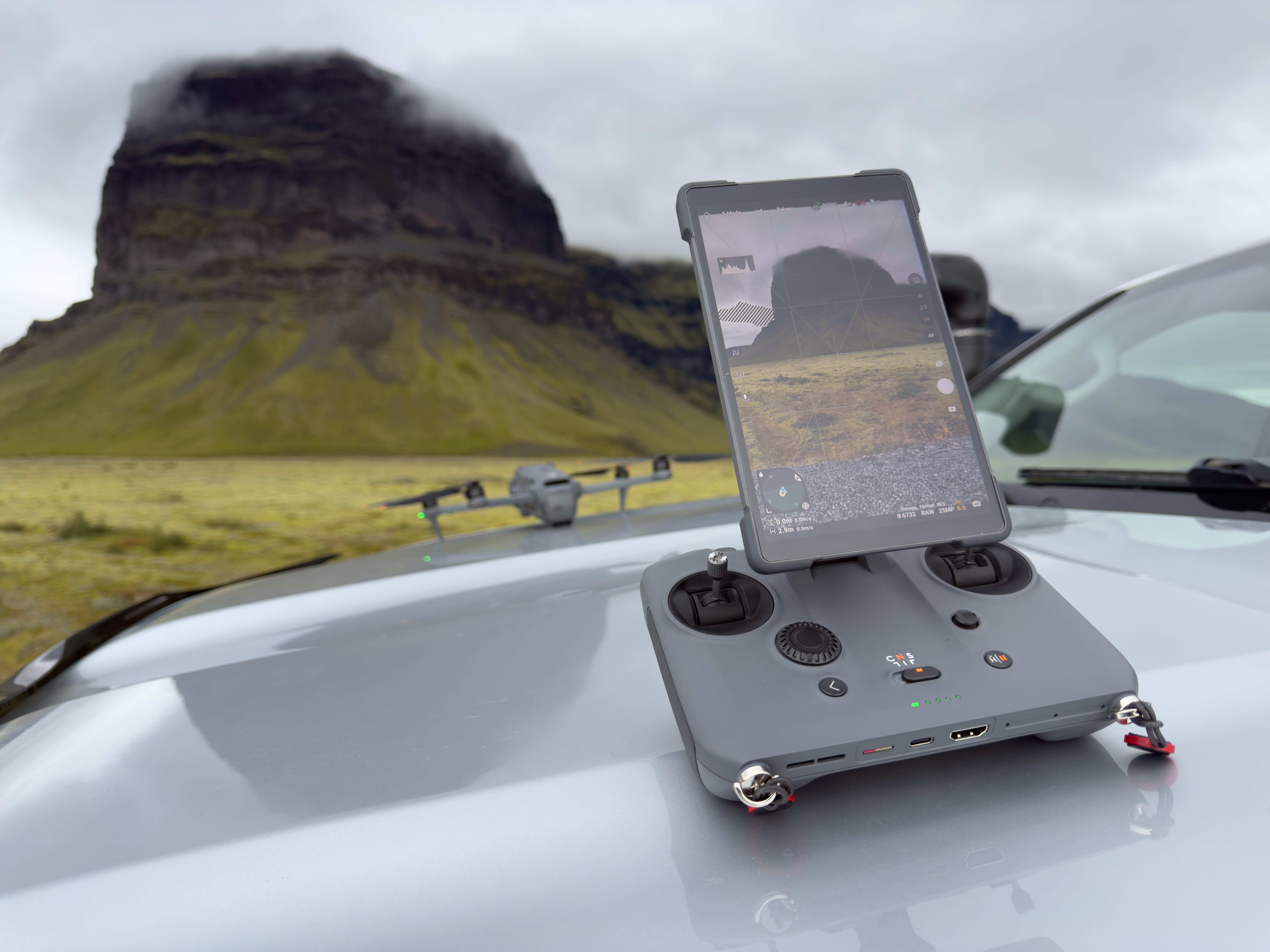
With true vertical shooting, conveniently supported with the incredible screen-turning DJI RC Pro 2, the usage of CPL’s became too limiting for me unless the technology can advance.
Conclusion: What Could Be A Future Solution To My Problem?
You can, of course, accept the limitations of using CPL and ND-PL filters and still use them. While that doesn’t work for me and my workflow , it may work for you and your workflow. However, and I am just speculating here, I think the way for CPL and ND-PL filters to evolve is perhaps already present. Before Mavic 4 Pro released, there were a lot of rumors about a possible DJI-branded electronic ND filter (and some people have even demonstrated functioning filters online). That filter was to mount like any other filter but it electronically connected to the drone via a connector that sits on the front of the camera. For whatever reason, that filter hasn’t seen the light of day (yet) but given the existence of working pre-release versions, product manuals and videos of the eND filter at work, it does look like it was very close to being released.
So how could this present a solution for a polariser? The electronic ND filter was supposed to get power via the connector pins in the gimbal so perhaps it is possible to have an electronically controlled polariser that can be rotated too. While this is currently not on the market, the existence of this rumored electronic ND filter makes me believe that this is technically achievable and it could be a great evolution to drone filter technology, making these filters much more usable than they are now.

Behind Mavic 4 Pro’s face plate sits a new connector that is meant to be used with the unreleased eND filter. Could this connector be used to create a rotating polarising filter?
Frequently Asked Questions
What Does A Polarising Filter Do On A Drone?
A polarising filter (CPL) reduces reflections and glare from surfaces like water, ice, snow, and wet rocks, while also increasing contrast and colour saturation. This can result in deeper blue skies, richer greens, and clearer detail in your drone photos and videos.
When Should You Use A Polarising Filter On A Drone?
You should use a polarising filter when shooting over water, ice, wet rocks, or other reflective surfaces. It is also useful when you want stronger colours, better contrast, and less glare in your image. In most situations, the effect is strongest when your drone is flying at roughly a 90-degree angle to the sun.
When Should You Not Use A Polarising Filter On A Drone?
You should avoid using a polarising filter in low light, at sunrise or sunset, or when you want to keep reflections in the scene. It can also create uneven results in wide-angle images or panoramas, especially when photographing large areas of sky.
Why Are Polarising Filters Harder To Use On Drones?
Polarising filters are more difficult to use on drones because you cannot easily adjust them once the drone is in the air. The strength of the effect depends on the angle of the filter relative to the sun, which means you need to set it before takeoff and keep that in mind while flying and composing your shot.
Why Does The Sky Sometimes Look Uneven With A Polarising Filter?
This happens because a polarising filter does not affect all parts of the sky equally. In wide-angle drone photos, one part of the sky may appear much darker than another, especially when shooting panoramas or scenes that cover a large field of view.
Do You Need ND Or CPL Filters For Drone Photography?
ND and CPL filters serve different purposes. ND filters reduce the amount of light entering the camera so you can control shutter speed, which is especially useful for video. CPL filters reduce reflections and glare while improving colour and contrast. Some drone photographers prefer ND/PL combination filters to get both benefits in one.
Do Polarising Filters Affect Exposure?
Yes, polarising filters reduce the amount of light entering the lens. This means your camera may need to use a slower shutter speed or raise the ISO to compensate. That is one reason why they are less useful in darker conditions.
Is A Polarising Filter Always A Good Idea?
No, a polarising filter is a situational tool rather than something you should use by default. In the right scene it can improve an image dramatically, but in the wrong scene it can create uneven skies, remove reflections you want to keep, or reduce image quality in low light.
DISCOUNT
The Drone Photography Masterclass – Video Course
Nigel Danson & Jeroen Van Nieuwenhove‘s complete drone photography video masterclass will explore everything you need to know to start creating the best aerial photographs using any type of drone in 50+ detailed videos. Whether you are a complete beginner or an advanced drone pilot, this video course contains a vast amount of information to level up your drone photography skills.
Discover Jeroen’s Photo Workshops in Iceland, Greenland & Beyond
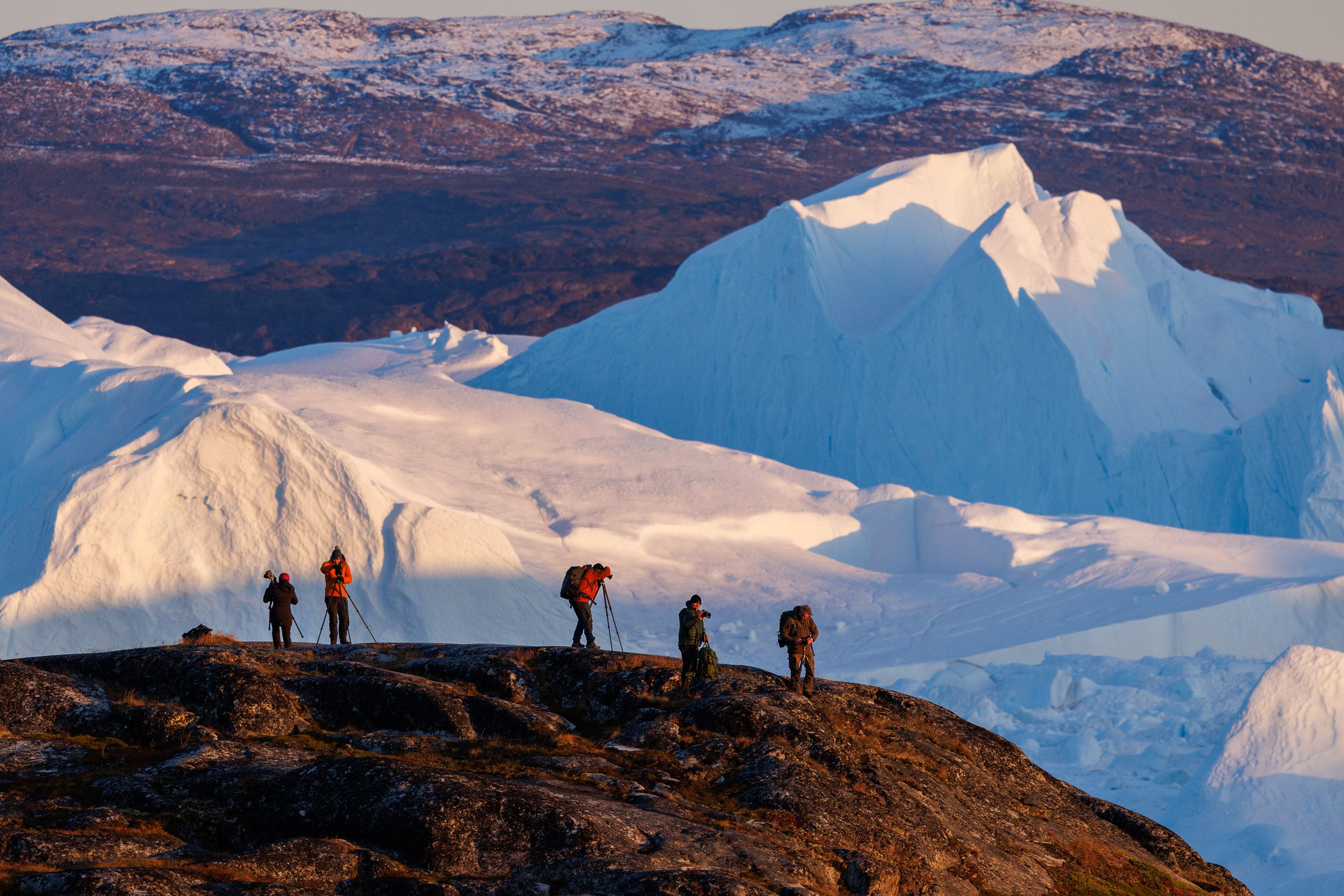
Ready to take your photography to the next level? Join me, Jeroen Van Nieuwenhove, on unforgettable photo workshops in Iceland, Greenland, Antarctica and other exciting destinations. Whether your passion is wildlife photography, bird photography, landscape adventures, or mastering drone photography, each workshop is designed to give you hands-on guidance in some of the world’s most spectacular locations.
From puffins in the midnight sun to Arctic foxes in the wild, from glaciers and volcanoes to dramatic coastlines seen by drone – these journeys are more than workshops; they’re once-in-a-lifetime experiences. Group sizes are kept small, ensuring personal mentoring and plenty of shooting opportunities.
Looking for something specific? Check out Jeroen’s…
- Wildlife & Bird Photography Workshops (Puffins, Arctic Foxes)
- Drone Photography Workshops
- Photo Workshops in Iceland
- Photo Workshops in Greenland
- Photo Workshops in Antarctica
Spots are limited – secure your place today!
Are You Looking For A Specific Photo Workshop?
All Upcoming Photography Workshops With Jeroen
Explore all upcoming photography workshops with Jeroen and take your skills to the next level in some of the world’s most extraordinary locations. From the volcanic landscapes of Iceland to the ice-filled fjords of Greenland and the wildlife-rich polar regions such as Antarctica, each workshop is designed to help you grow creatively while experiencing unforgettable moments in the field. Browse all upcoming departures below and find your next adventure!
Puffins in the Midnight Sun 2026 Photo Workshop
LAST SPOT
West Greenland 2026 Photo Workshop
SOLD OUT
Aerials of the Icelandic Highlands 2026 (08-15 July)
SOLD OUT
Aerials of the Icelandic Highlands 2026 (01-08 August)
SOLD OUT
Aerials of the Icelandic Highlands 2026 (13-20 August)
SOLD OUT
Aerials of the Icelandic Highlands 2026 (22-29 August)
SOLD OUT
East Greenland Photo Expedition 2026
LAST SPOT
East Greenland With James Popsys 2026
SOLD OUT
Autumn in West/North Iceland 2026 (with Mads)
SOLD OUT
Iceland in Winter 2026 Photo Workshop (with Mads Peter Iversen)
SOLD OUT
Antarctica & South Georgia Photo Expedition 2028
OPEN FOR BOOKINGS
Choosing the right photography workshop is about more than just visiting iconic locations. It’s about experience, safety, timing, and personal guidance. Below you’ll find honest reviews from photographers who have joined me on landscape, wildlife & drone photo workshops in Iceland, Greenland and other locations. These testimonials reflect real experiences in small groups, hands-on instruction in challenging conditions, and the level of care Jeroen aims to bring to every workshop.
These reviews are verifiable on Jeroen’s public Google Business profile.


Support Jeroen’s Work
As an independent photographer, Jeroen partially relies on your support to keep producing worthwhile content such as blogs, photographs, books and much more. If you want to support his work, it is possible to do so by buying his e-books & books or prints.
You can also sign up to the newsletter to stay up to date on new blog posts, projects, workshops and other interesting information.
Thank you for considering!